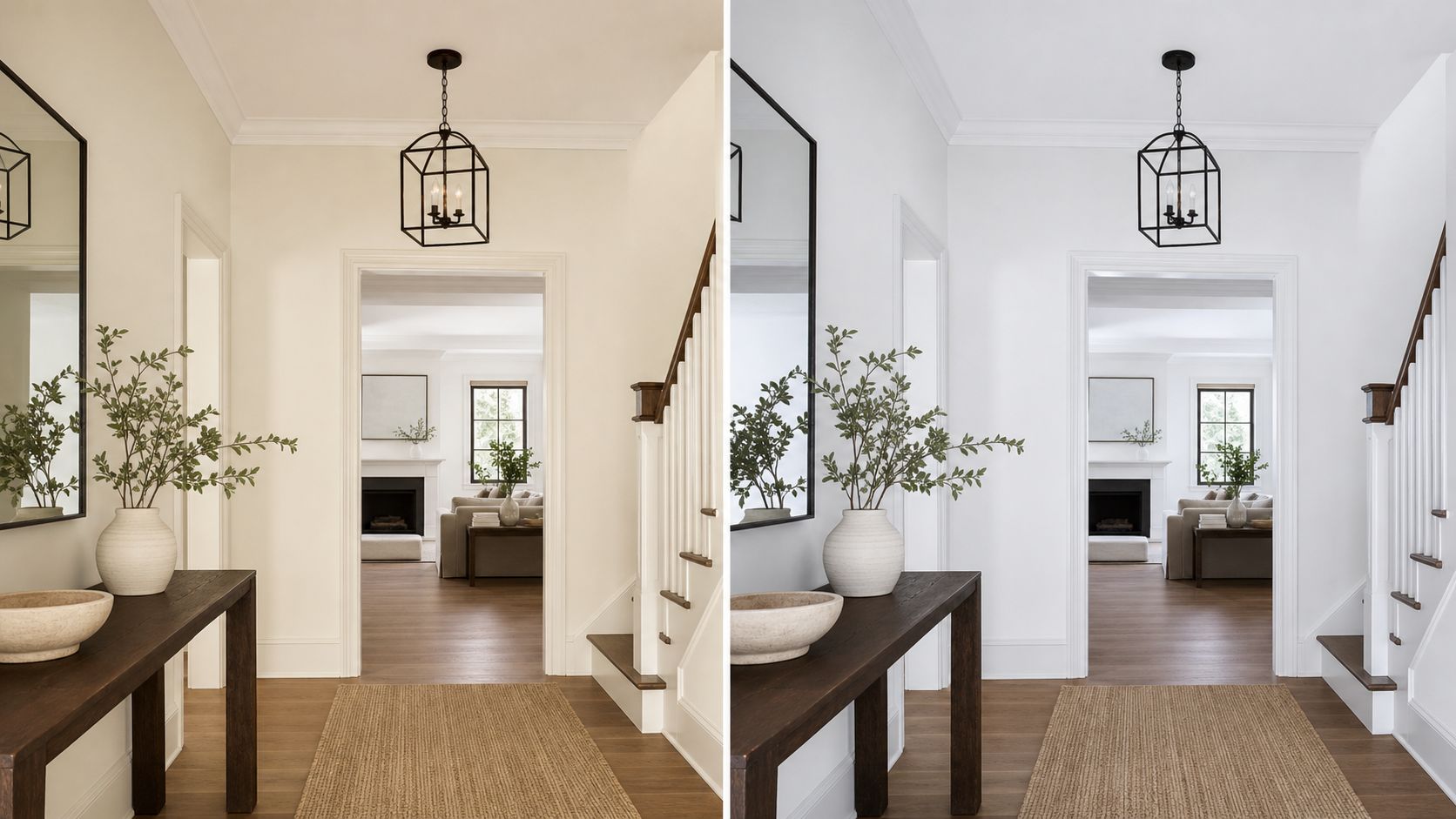
What is the difference between warm white and cool white paint?
| Warm white | Cool white | |
|---|---|---|
| Undertone | Yellow, cream or red | Blue, grey or green |
| Feel | Soft, cosy, enveloping | Crisp, clean, modern |
| Looks best with | Timber floors, warm cabinetry, cream tiles | Cool grey flooring, white stone, bright rooms |
| Risk | Can turn yellow under warm bulbs or north-facing sun | Can turn blue, grey or sterile in low or southern light |
Neutral whites sit between the two and show very little undertone. They can be the safest choice where a home mixes warm and cool materials.
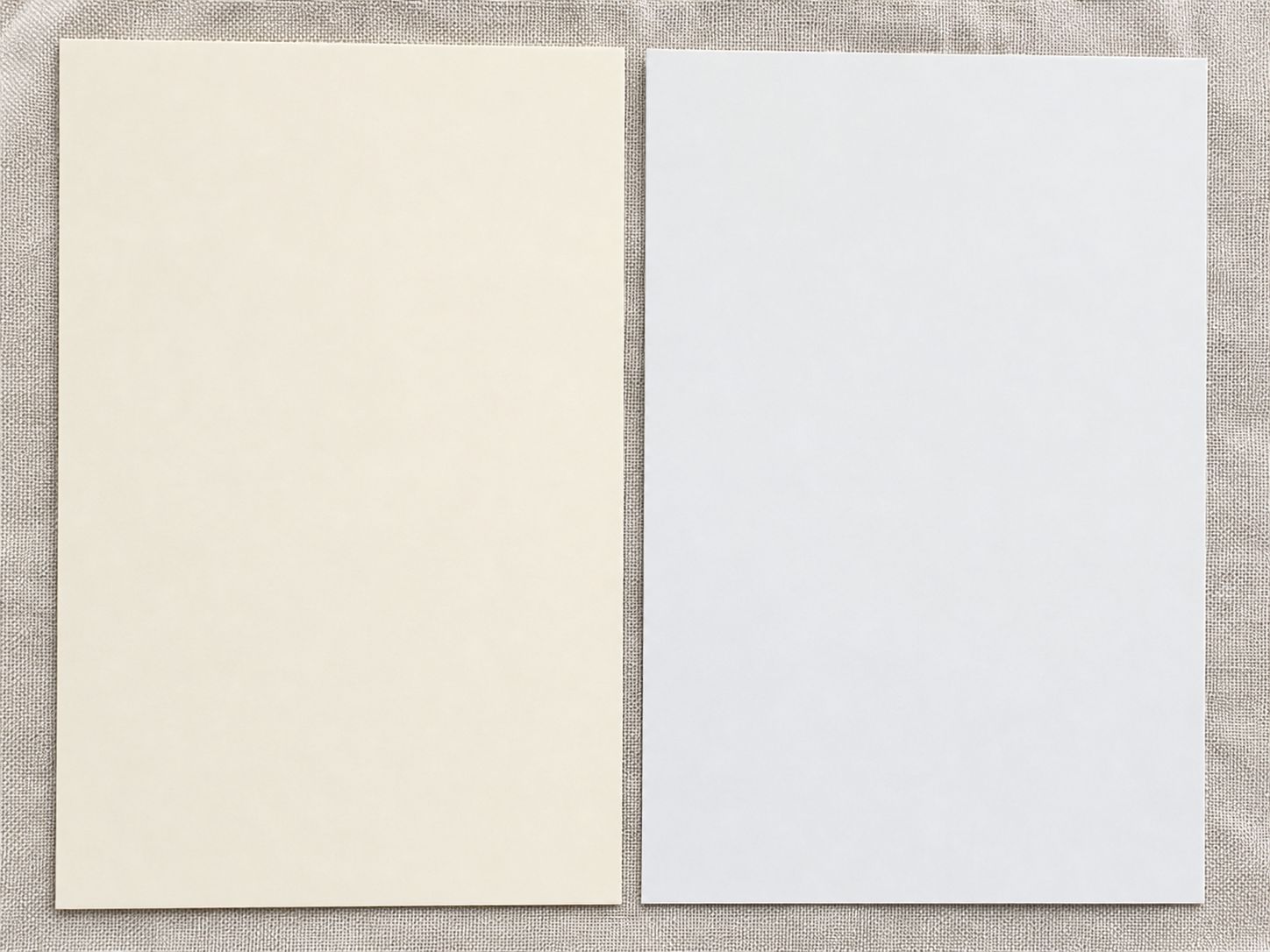
Why can a white look yellow, blue or grey?
A white looks yellow, blue or grey because its undertone is revealed by the light and the surfaces around it. Three causes account for most cases:
- Yellow: a warm or cream undertone, warm bulbs, strong north-facing sun, or warm timber and cream surfaces nearby.
- Blue: a cool undertone, cool bulbs, southern light, or blue-toned flooring and benchtops nearby.
- Grey: a mid-toned white in low light, grey flooring, or a room with little direct sun that flattens the colour.
Which white suits which floor, cabinet or room?
| If you have... | Then consider... | Because... |
|---|---|---|
| Timber or warm-toned floors | A warm or neutral white | A cool white beside warm timber can look stark or slightly blue |
| Cool grey flooring | A neutral or cool white | A warm white can look yellow against cool grey |
| White cabinetry or stone benchtops | A white that matches their undertone | Mismatched whites in one view look dirty rather than fresh |
| A dark or south-facing room | A warmer white | Warmth offsets the cooler, flatter light |
| A bright north-facing room | A neutral or cooler white | Strong sun already adds warmth |
A common problem for interior painters Geelong to fix is a white chosen from a chip that fights the floor once it is on the wall, which is why the floor and benchtop should be checked first.
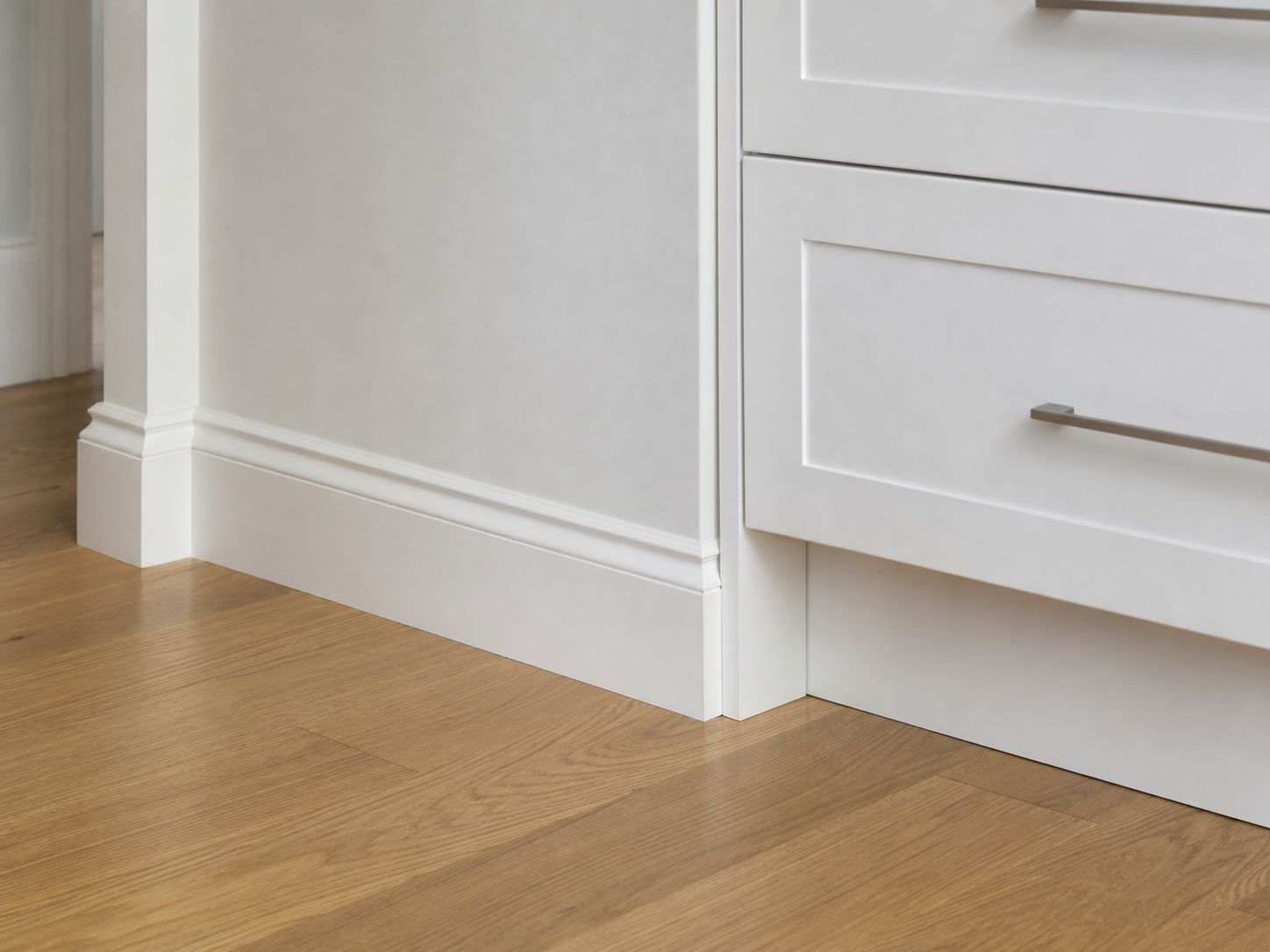
How does lighting change warm and cool whites?
Bulb colour matters as much as daylight. Colour temperature is measured in kelvin: warm white bulbs are typically around 2700 to 3000 K, while cool white and daylight bulbs start at about 4000 K and go higher. A warm white wall under a cool daylight bulb loses its softness, and a cool white wall under a warm bulb can turn creamy. Choose the bulbs first, then test the paint under them. Colour consultation is included with every quote for interior painting Geelong, and we advise on the room's light and the bulbs you use.
How should I choose between them?
- Decide the mood.Soft and cosy points to warm whites, crisp and modern to cool ones.
- Check the floor and benchtops.They set the undertone the wall has to live with.
- Test both side by side.Paint a warm and a cool candidate next to each other on a 50 cm square patch each.
- Judge at three times of day.Morning, afternoon and under lamps, before choosing.
If two whites still look identical, ask the house painters Geelong on your shortlist to hold samples against your floor and benchtop during the quote visit.
When is a painter's opinion useful?
When two whites look almost identical on the wall, a second set of trained eyes helps. Our wall finishes guide explains sheens and how whites are applied. If you are combining interior and exterior work, painting services Geelong can be quoted together, so the same team handles the whole property.