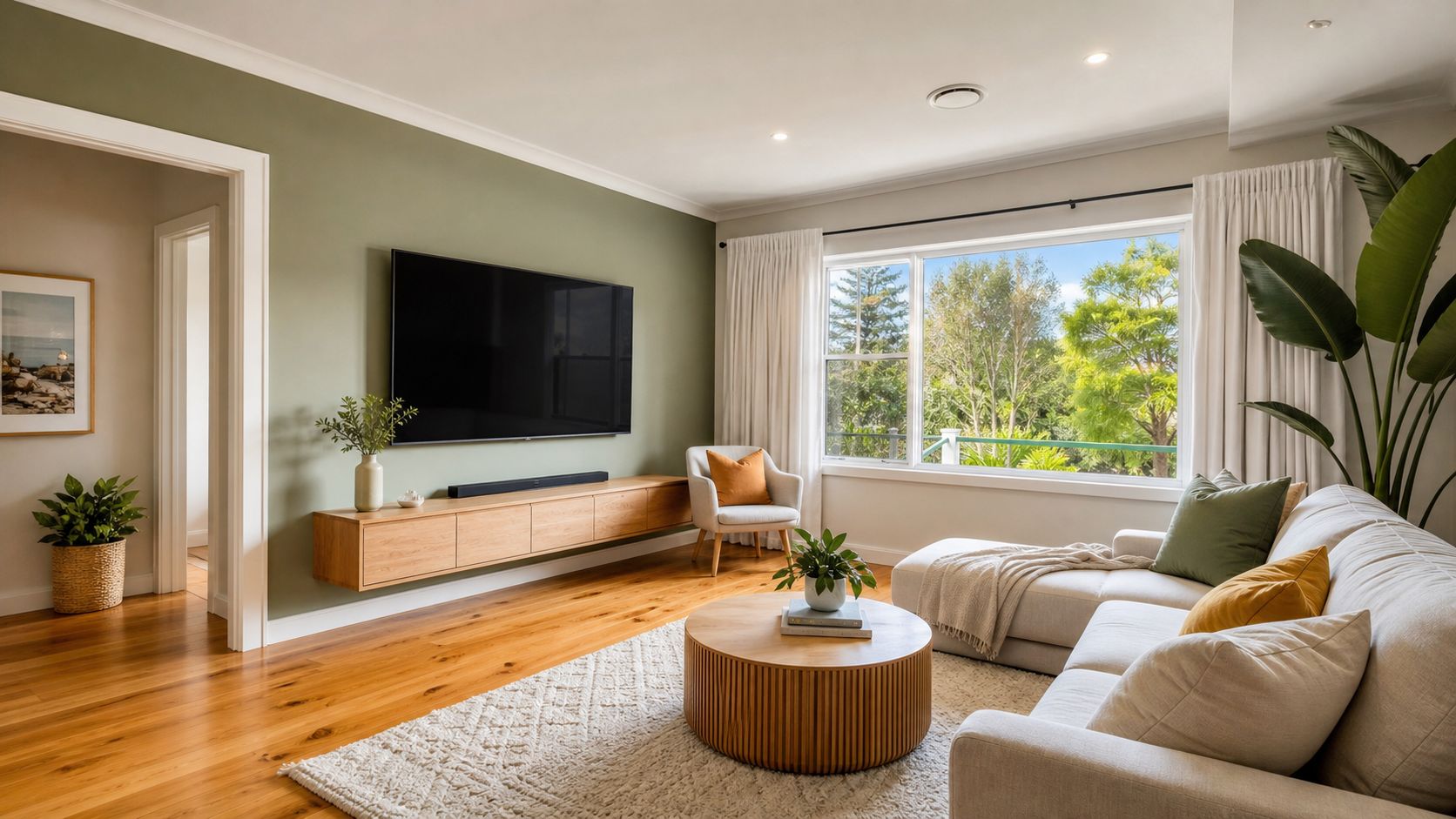
Which interior colours suit most Geelong homes?
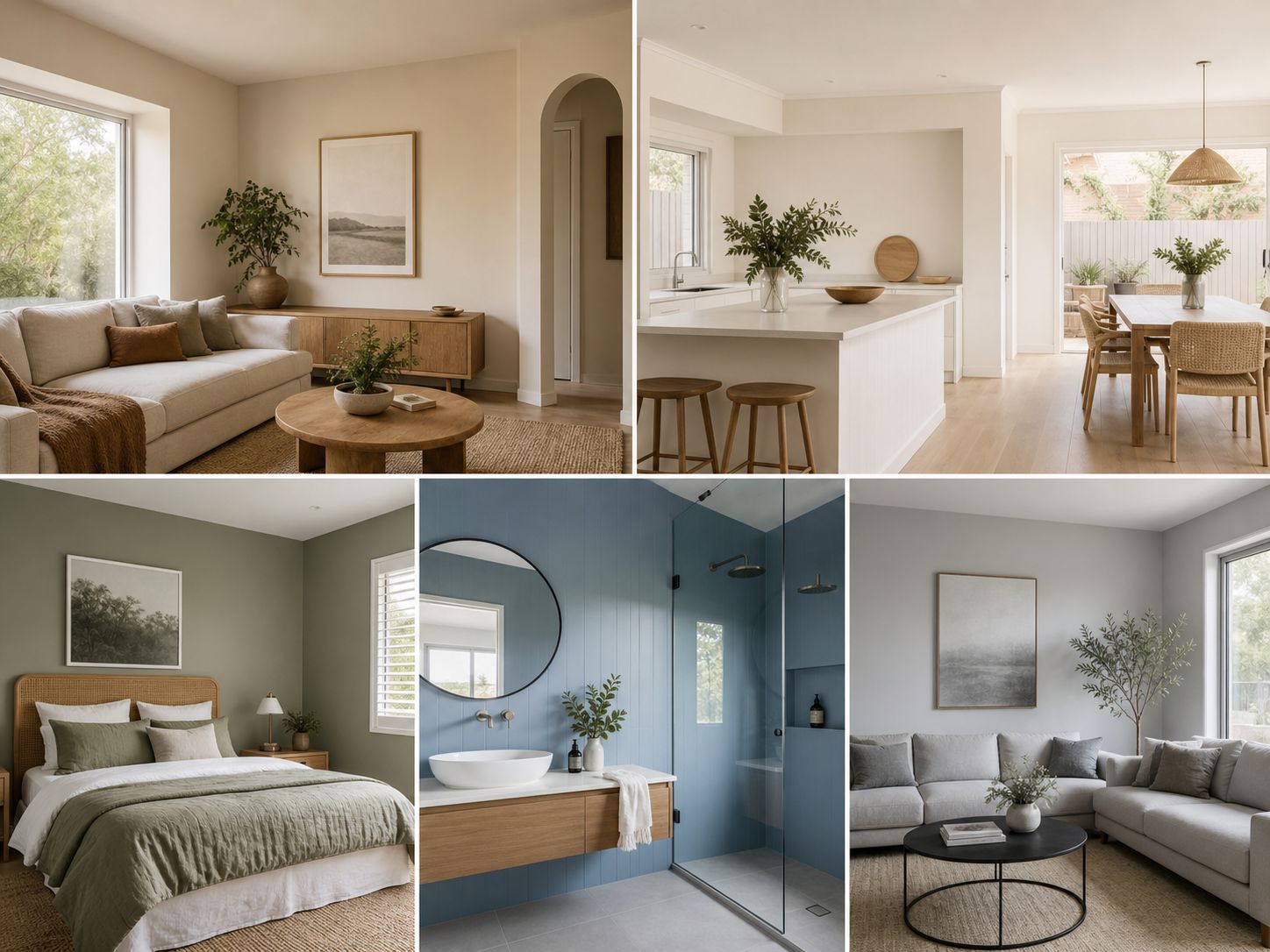
Five colour directions cover most interiors. Each works best under particular conditions, so start with the conditions in your own home.
| Direction | What it looks like | Suits | Check first |
|---|---|---|---|
| Warm neutrals | Creamy beige, soft sand, warm greige | Timber floors, warm cabinetry, rooms with limited sun | That the undertone doesn't turn too yellow when the light changes |
| Soft greys | Light grey with a neutral or slightly warm base | Grey flooring, modern joinery, bright rooms | Cool greys can look blue or flat in south-facing or low-light rooms |
| Whites and off-whites | Warm, neutral or cool whites | Almost any room as a calm backdrop | The white against your floor and benchtop, not on a chip |
| Muted greens and blues | Sage, soft blue-green, grey-blue | Bedrooms, living areas, rooms with good daylight | How they look beside timber and under lamps at night |
| Deeper accents | Charcoal, deep green, navy | Feature walls, studies, joinery | Deep colours need a tinted undercoat and can feel enclosed in a small room |
How do flooring and fixed finishes narrow the choice?
Flooring narrows the choice more than any other element, because its undertone shows up in every wall colour beside it. Benchtops, cabinetry and large furniture do the same on a smaller scale.
- Timber floors usually sit comfortably with warm neutrals, creamy whites and muted greens.
- Grey floors tend to suit neutral or cool-leaning colours, but a very cool wall beside a cool floor can feel stark.
- Tiles should be checked for undertone and against the grout, in daylight.
- Carpet should be held against the wall sample in the room, not compared in a shop.
Which finish suits walls, ceilings and trims?
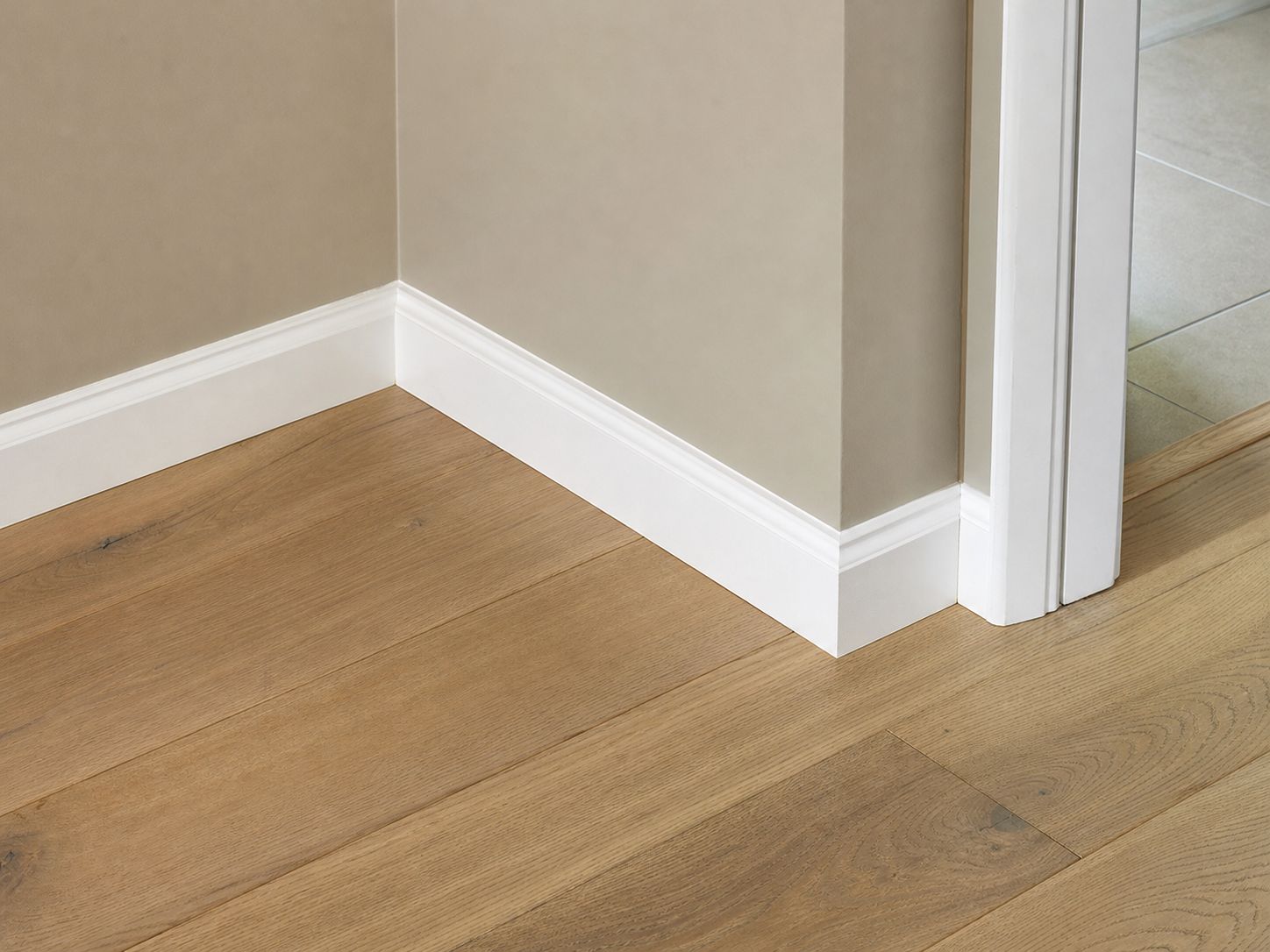
Colour and finish work together. Lower sheen softens a colour and hides surface imperfections, while higher sheen reflects more light and shows flaws. The finish most Geelong homes use is set by the surface, not the colour:
| Surface | Common finish | Why |
|---|---|---|
| Walls | Washable low-sheen acrylic | Wipes clean in family rooms and hallways |
| Ceilings | Dedicated flat ceiling white | Hides imperfections and reflects light evenly |
| Kitchens and bathrooms | Mould-resistant low-sheen | Handles steam and splashes |
| Doors and trims | Water-based enamel, satin or semi-gloss | Hard-wearing and stays white rather than yellowing |
Our wall finishes guide explains sheens, whites and technique in more detail. Professional wall painting Geelong starts with washing, filling and sanding, because preparation decides whether the colour you choose still looks right in a few years.
Do older and newer Geelong homes need different colours?
Not necessarily different colours, but different preparation and different light. Geelong's housing stock spans a century of wall construction, from hard plaster and lath in Newtown to brick veneer in Belmont and fresh plasterboard in Armstrong Creek, and each takes fillers and primers differently. Older homes often have smaller windows and original trims that can make colours read darker, while newer homes often have larger windows and open-plan areas where continuity between rooms matters more. Our interior house painting Geelong team prepares each wall type differently, so the colour you choose goes onto a sound surface whether the home is a century old or brand new.
How can I narrow down my shortlist?
- Photograph your fixed elements.Floors, benchtops and cabinetry, in daylight, so you compare against real material.
- Note the light.Which way each room faces and when you use it most.
- Choose two or three candidates.Not ten. More choices make it harder to see differences.
- Test large patches.About 50 cm square, two coats, beside the fixed elements, viewed morning, afternoon and under lamps.
If you are torn between two finalists, ask the painters in Geelong you are considering whether test patches on your own walls are part of the quote.
When does a painter's advice help?
Advice helps most when a house has mixed finishes, a dark room, or an existing strong colour to cover. For the full process and costs, see our interior guide. If you have searched for painters near me, look for an itemised written quote and a quote visit that includes colour advice, not just a price.