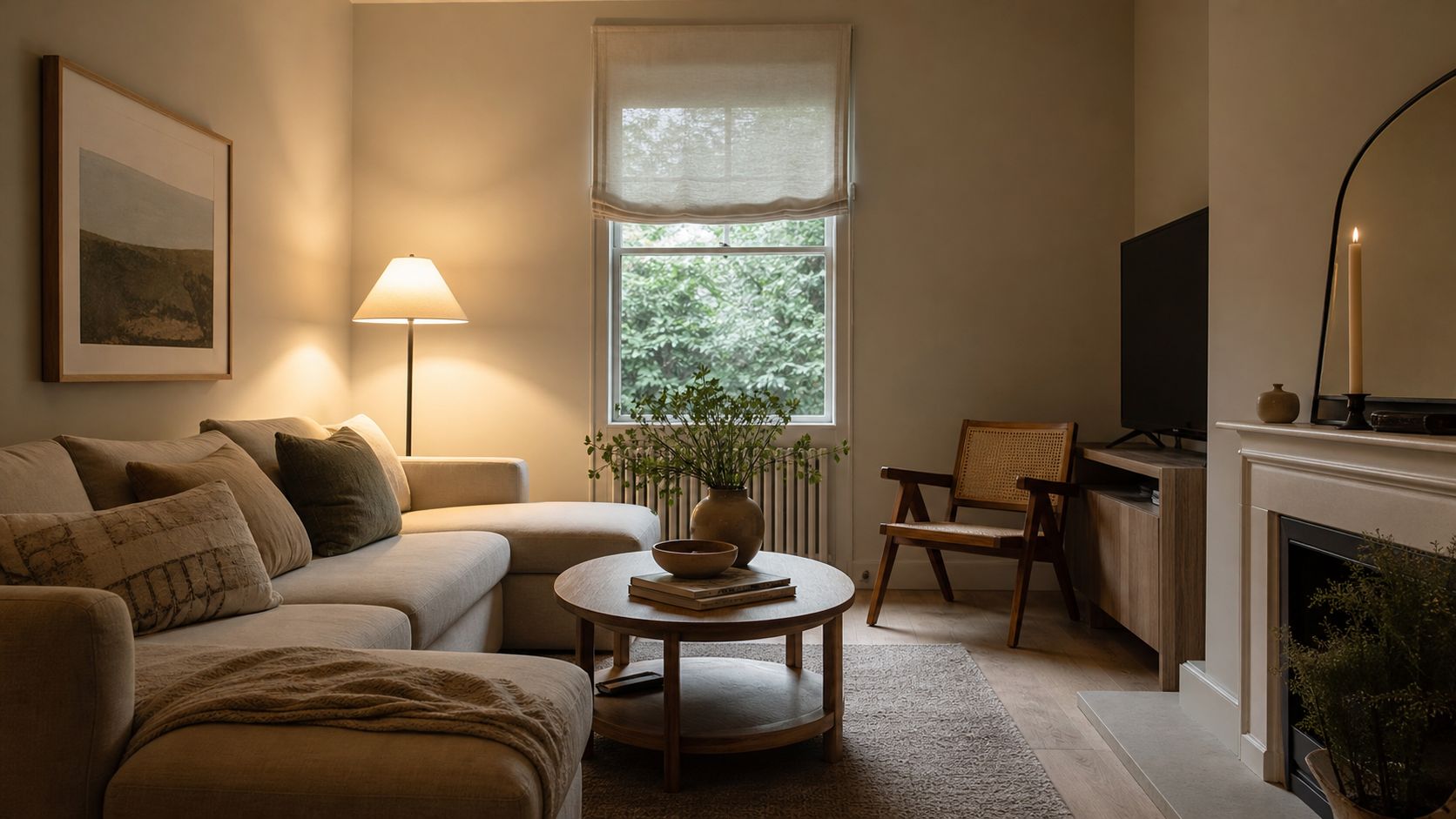
What colour should I paint a dark room?
There are two workable strategies, and the right one depends on how you want the room to feel.
| Strategy | Colours | Works when | Watch for |
|---|---|---|---|
| Reflect the light | Light warm neutrals, soft off-whites, pale muted greens or blues | You want the room to feel brighter and more open | Stark whites and cool greys can look flat or grey in low light |
| Embrace the dark | Deep greens, navy, charcoal, rich earthy tones | You use the room mostly at night, or want a cosy, enclosed feel | Needs good preparation and a tinted undercoat; unsuitable if the room already feels gloomy by day |
| Mid-way | Soft mid-tone neutrals with a warm base | You want warmth without losing too much light | Test beside the floor so it doesn't look muddy |
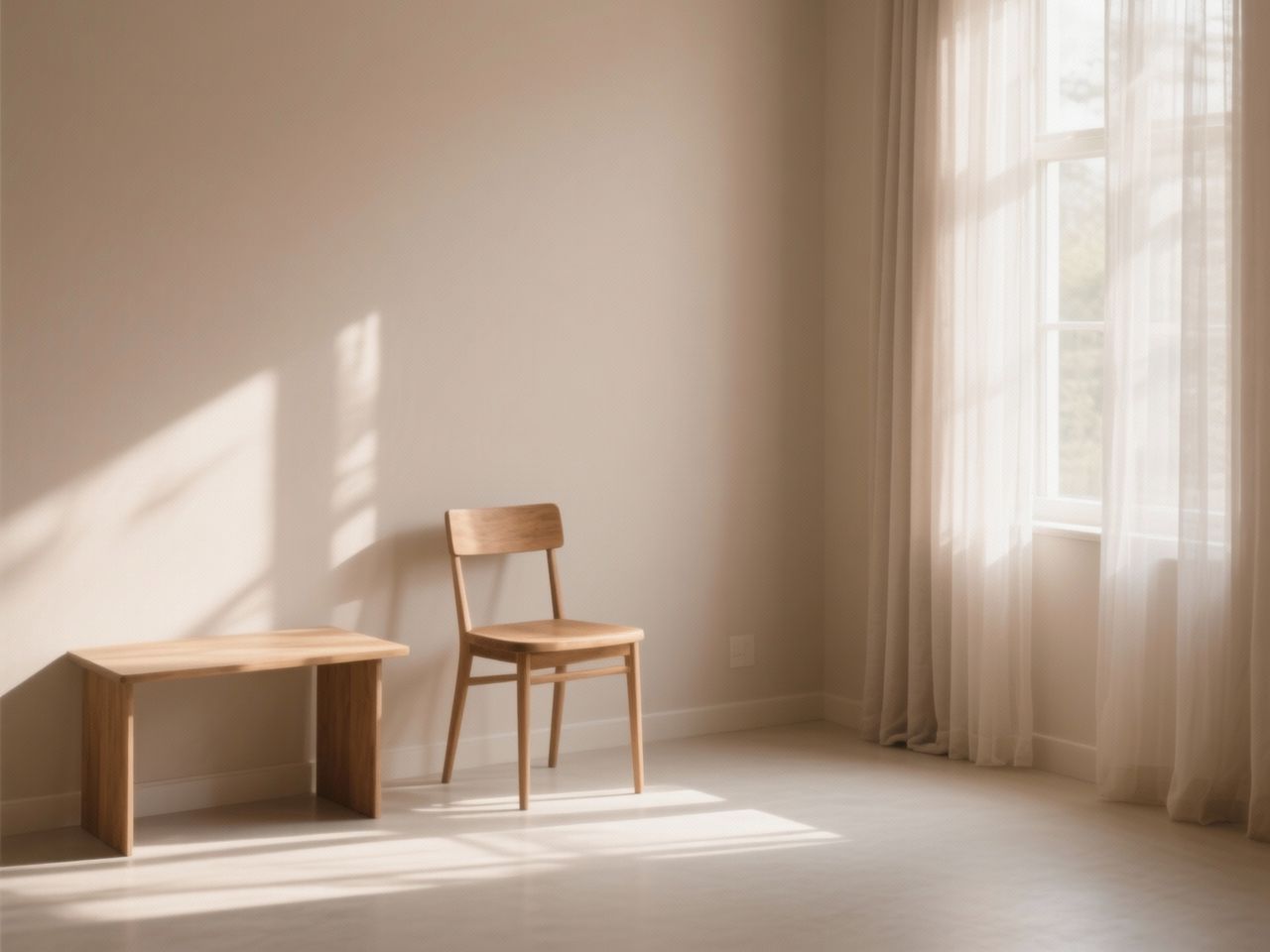
Should I paint a dark room a dark colour?
Sometimes. A dark room painted in a deep colour can look deliberately intimate rather than accidentally gloomy, particularly when the lighting is warm and layered. It is a poor choice if you want the room to feel brighter. Our wall painting Geelong process uses a tinted undercoat, so deep colours cover in two coats instead of four.
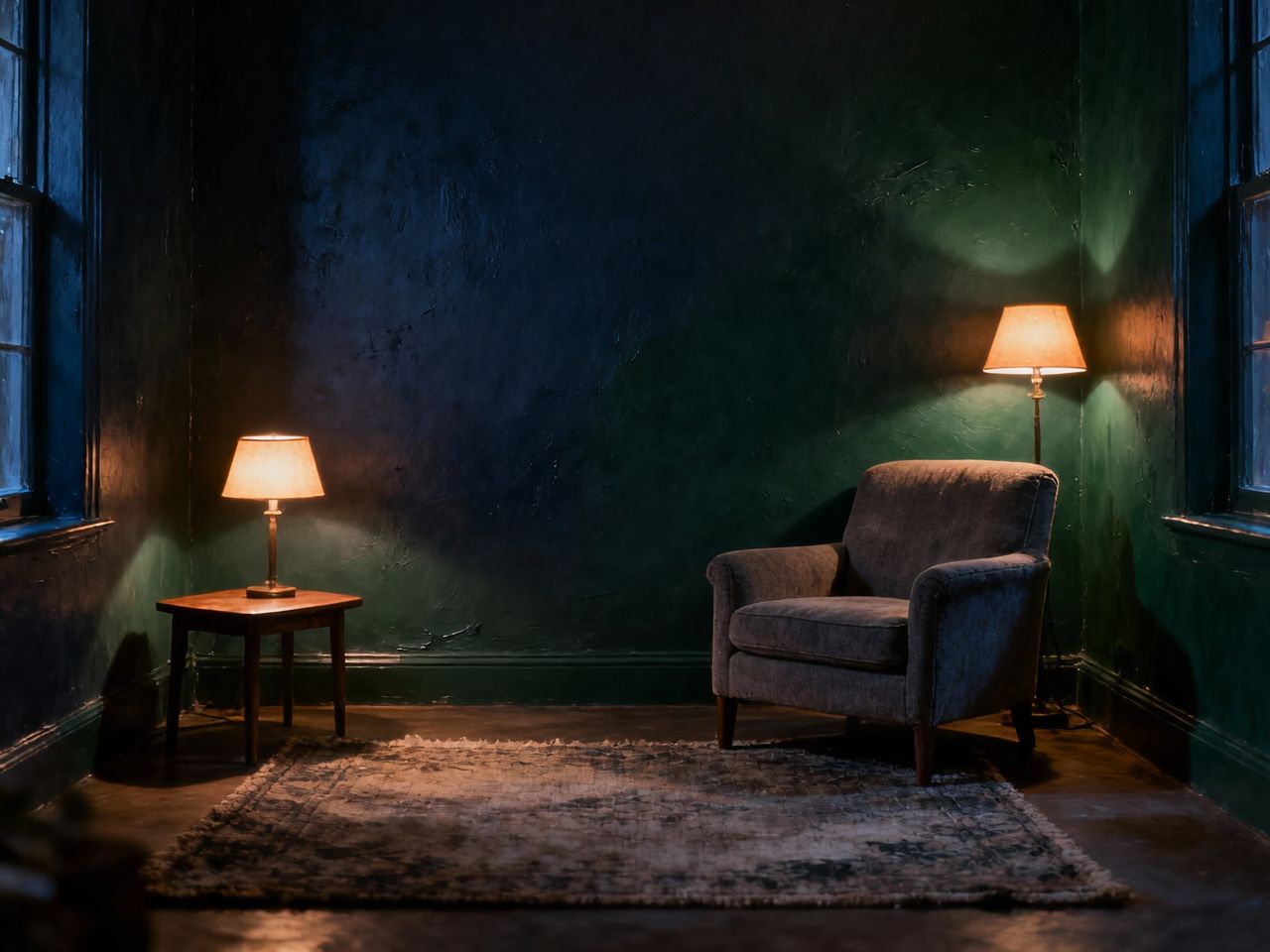
Do warm or cool colours work better in low light?
Warm undertones generally work better in low light, because cool colours lose brightness and can read as grey or blue. A cool grey in a south-facing room with little sun is the most common example of a colour that looks flat. Check the undertone on a sample in the darkest part of the room.
How do ceilings, finish and lighting help?
- Ceiling: a bright flat ceiling white helps bounce the available light back into the room.
- Finish: a slightly higher sheen reflects more light, but it also shows wall imperfections, so preparation matters.
- Artificial light: warm bulbs flatter warm colours, while cool bulbs can make a pale colour look cold. Choose the bulbs first.
- Trims: bright trims add edge definition and a little lift.
Higher sheen shows imperfections, so ask the painters Geelong you hire how the walls will be prepared before a glossier finish goes on.
What about dark hallways and rooms with no windows?
Hallways and windowless rooms depend entirely on artificial light, so test samples under the bulbs you will actually use. Light, warm colours usually work best in a dark hallway, with a washable low-sheen finish because hallway walls get brushed past daily. In a windowless room, a deeper colour can make the space feel purposeful instead of trying to make it look bright. Hallway walls are brushed past daily, which is why quotes for interior painting Geelong should name a washable low-sheen finish for them.
How do I test colours in a dark room?
- Paint two or three patches.About 50 cm square, in two coats.
- Check at three times.Morning, midday and evening, plus under lamps at night.
- Look in the darkest corner.That's where a colour is most likely to go flat.
- Compare side by side.Put a light warm option beside a deeper one so you see the difference in mood.
Do I need a painter for a dark-room repaint?
If you are covering an existing dark colour with a lighter one, preparation matters. A tinted undercoat and a quality trade acrylic usually let the new colour cover in two coats instead of four. Our wall finishes guide explains the preparation and finishes. Colour consultation is included with every quote for interior house painting Geelong, and we advise on undertone and finish for rooms with limited light.