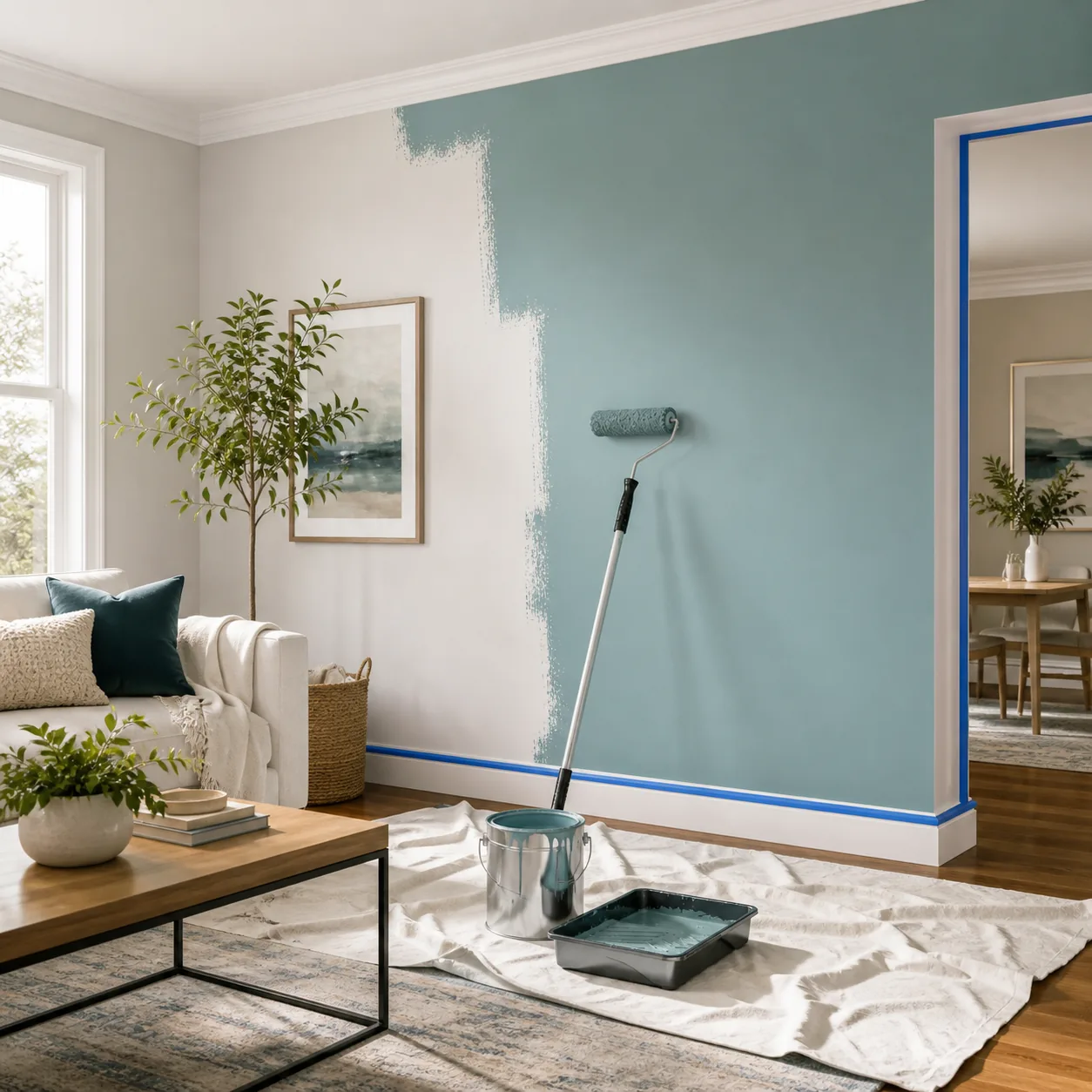
Walls make up around 80% of the painted surface in any home, which means interior wall painting has more impact on how your rooms look and feel than every other painting task combined. Get the walls right and small flaws elsewhere disappear; get them wrong and even a beautifully styled room looks tired.
This guide covers what actually determines a great wall finish: surface preparation, choosing paint for interior walls, picking colours (especially whites) that work in Australian light, and the technique interior wall painters use to avoid the streaks and lap marks that give DIY jobs away. It's part of our complete interior house painting guide for Geelong homeowners.
Preparation: Where Wall Painting Is Won or Lost
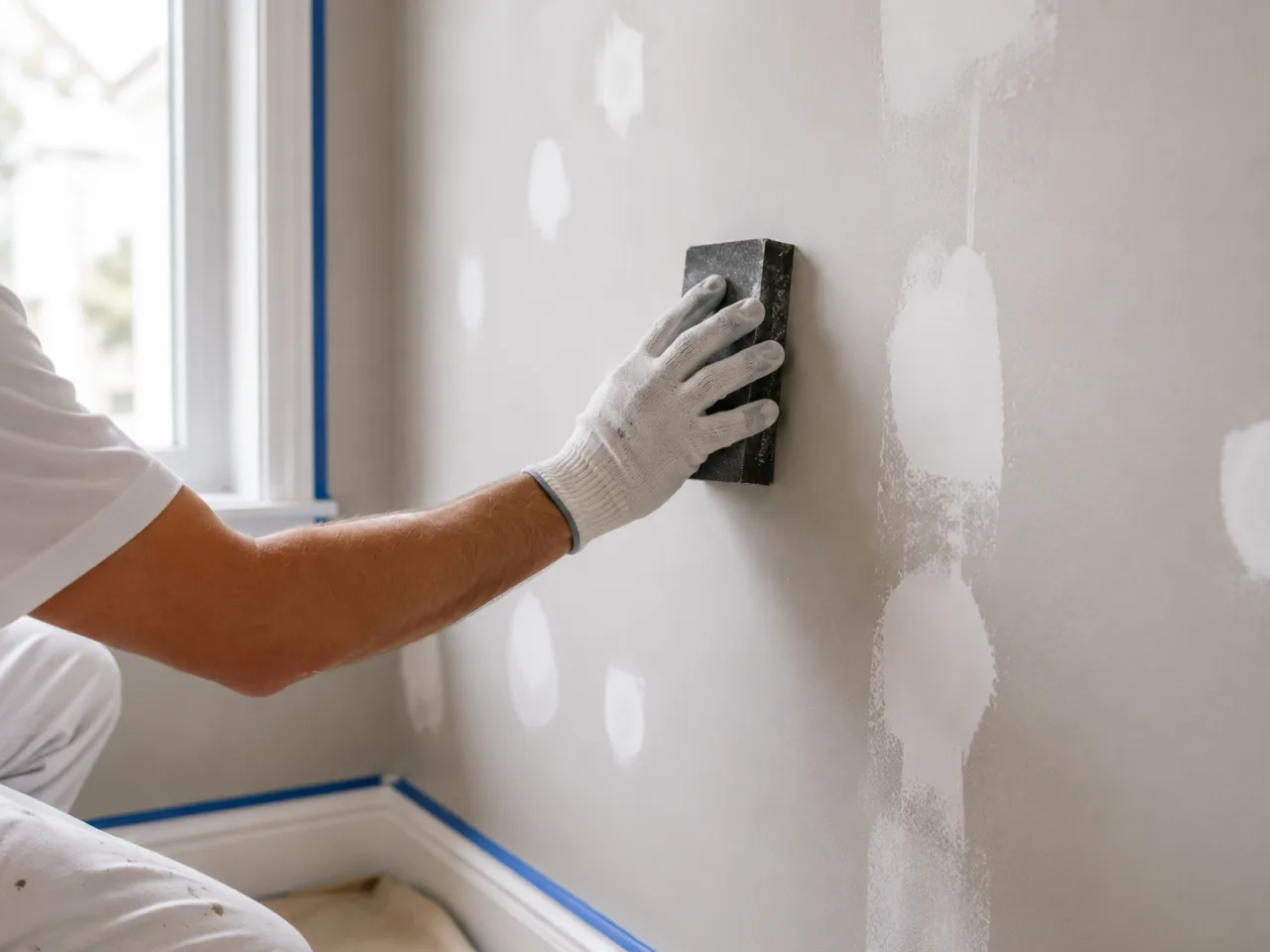
Paint doesn't hide problems — it highlights them. A low-sheen finish under afternoon light will show every unfilled nail hole, every poorly sanded patch, and every greasy spot the paint couldn't grip. Proper wall prep means:
- Wash the walls. Sugar soap removes the grime, cooking film, and hand oils that stop paint adhering, especially in kitchens, hallways, and around light switches.
- Fill and sand. Nail holes, dents, and hairline cracks get filled, dried, and sanded flush. Larger plaster damage needs a proper plaster repair, not just filler.
- Spot-prime stains and patches. Water marks, crayon, and bare filler all need a stain-blocking primer or they'll bleed or "flash" through the top coats.
- Caulk the gaps. A bead of gap filler where walls meet skirting boards and architraves is the cheapest upgrade in painting — it makes the whole room look sharper.
In Geelong's older suburbs this step matters even more. Period homes around Newtown and Highton often have lath-and-plaster or early hard plaster walls with decades of movement cracks. Experienced residential interior painters use flexible fillers and sometimes mesh reinforcement here, or the cracks return within months.
Choosing Paint for Interior Walls
For almost every wall in a home, the right interior wall paint is a quality washable low-sheen acrylic. Here's why that combination wins:
- Low-sheen (the sheen) reflects just enough light to be wipeable, while staying flat enough to hide minor surface imperfections. Full gloss on walls shows every flaw; dead-flat matt looks beautiful but marks easily in busy households.
- Washable (the formulation) means scuffs, fingerprints, and the occasional crayon masterpiece wipe off without burnishing the paint. Worth every dollar in hallways, kids' rooms, and living areas.
- Acrylic (water-based) is low-odour, fast-drying, and easy to touch up later.
The exceptions: bathrooms and laundries benefit from a kitchen-and-bathroom formulation with mould inhibitors, and a true matt can be lovely in adult-only spaces where durability matters less. Ceilings and trims each use different products entirely — see our ceiling painting guide and door and trim painting guide.
Choosing White Paint for Walls (Harder Than It Sounds)
White is the most popular wall colour in Australia and the easiest to get wrong, because there's no such thing as plain white. Every white paint for walls leans warm (yellow/red undertones) or cool (blue/grey undertones), and the light in your room decides which works.
- South-facing rooms receive cooler light — warm whites stop them feeling clinical
- North-facing rooms are flooded with warm light — they can handle crisp, cooler whites without feeling cold
- Coastal homes in brighter light handle cleaner, brighter whites well
Always test before committing: paint A4-size patches on two different walls and watch them across a full day. A white that looks perfect at 9am can turn distinctly cream by late afternoon.
What Colours Make a House Look Expensive?
Ask any stylist or agent and the answers converge: sophisticated neutrals, deep moody accents, and above all consistency. Warm whites and soft greige tones throughout the main living areas create flow and make spaces feel larger. Depth comes from one or two considered moments — a charcoal, deep green, or navy feature wall — rather than a different colour in every room. The "expensive" look is really three things: a limited palette, the right sheen on each surface, and flawless preparation.
Wall Painting for Living Rooms
Living areas deserve special thought because they get the most daylight, the most traffic, and the most scrutiny. Three practical guidelines: go washable always (it's the highest-touch zone in the house); consider light reflectance (large bright rooms can take deeper colours than you'd expect, small lounges benefit from lighter tones); and roll your final coat in consistent directions — uneven roller texture shows badly in raking side-light from windows.
The Technique: Cutting In and Keeping a Wet Edge
Cutting in is painting a neat brush-width band along edges — where walls meet the ceiling, corners, and around trims — before rolling. Use a quality angled brush, load it properly, and work in long smooth strokes. Cut in one wall at a time, not the whole room, so the cut-in band is still wet when you roll up to it.
Keeping a wet edge means always rolling back into paint that hasn't dried. Work in vertical sections about a metre wide, top to bottom, slightly overlapping the previous section while it's still wet. Stop mid-wall for a coffee and you'll see the lap mark forever.
Two coats is the standard. One coat almost never gives even colour depth, no matter what the tin promises. More habits like these live in our pro tips and hacks guide.
Tools Needed for Painting Interior Walls
- Quality 63mm angled sash brush (for cutting in)
- Roller frame with 230mm or 270mm sleeve — 10–12mm nap for lightly textured walls
- Extension pole (saves your back and gives more even pressure)
- Paint tray or roller bucket with liner
- Sugar soap, sponges, and a bucket
- Filler, filling blade, and sanding block (120–180 grit)
- Painter's tape, drop sheets, and a damp rag for instant mistake correction
Spending properly on the brush and roller sleeve matters most — cheap sleeves shed lint into your finish and hold less paint.
What Does Wall Painting Cost in Geelong?
If you're comparing wall painters in Waurn Ponds or anywhere across Geelong, here's the benchmark: professional wall painters charge roughly $25–$40 per square metre for walls in 2026, with a standard bedroom landing around $400–$900 and larger living areas $700–$1,400. Heavily patched or crack-repaired walls cost more because preparation drives time — our interior house painting service quotes both upfront. For whole-home and room-by-room pricing, see our full interior painting cost guide.