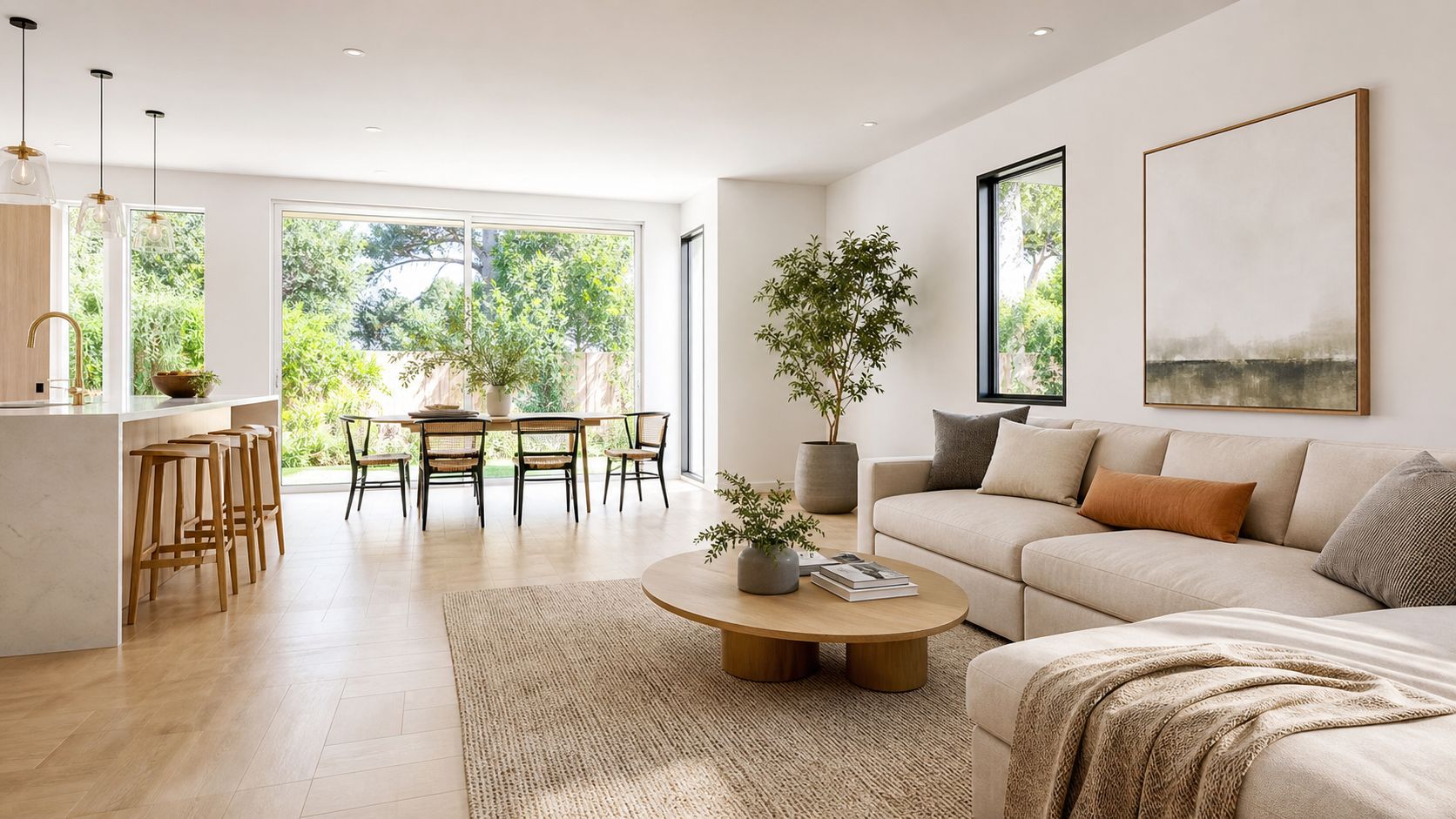
What are the main types of white paint?
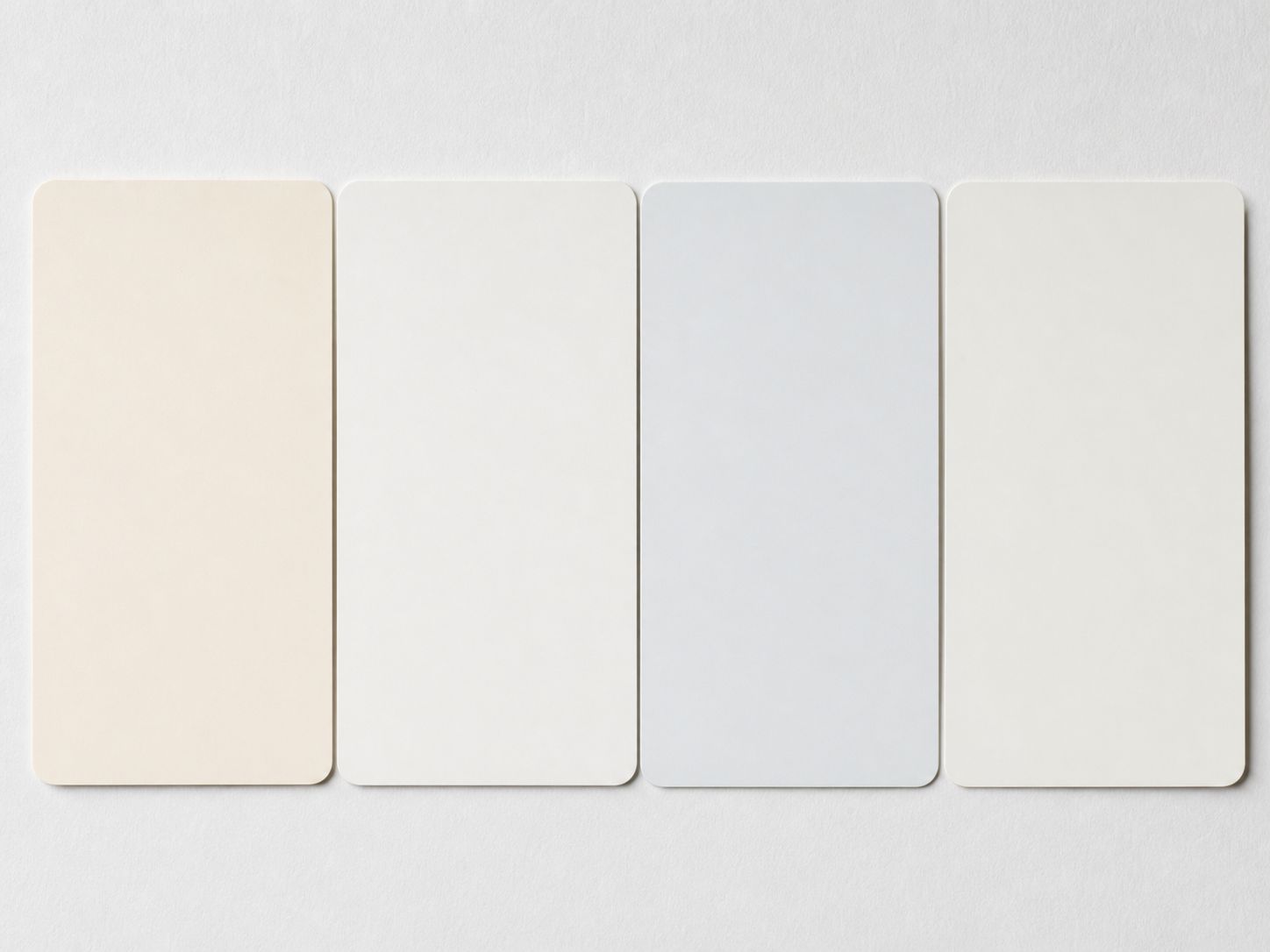
Whites differ by undertone, the faint second colour beneath the white. That undertone decides how soft or crisp the white feels and how it behaves beside your floor.
| Type | Undertone | Feels | Often suits |
|---|---|---|---|
| Warm white | Yellow, cream or red | Soft, enveloping | Timber floors, rooms with cooler light |
| Neutral white | Little visible undertone | Clean, balanced | Mixed finishes, rooms with several materials |
| Cool white | Blue, grey or green | Crisp, modern | Cool grey flooring, bright rooms with strong light |
| Off-white | White pulled towards cream or grey | Softer than a pure white | Walls beside brighter white trims |
How do I choose the right white for my home?
Choose the white last, after the things you can't change. Work through these in order:
- Start with the floor.Timber and cream tiles pull whites warm, while grey and blue-grey floors pull them cool. A white that fights the floor is the most common cause of a white that looks wrong.
- Check benchtops and cabinetry.A cool white stone benchtop beside a warm white wall can make the wall look dingy. Hold your white samples against the benchtop and any white cabinetry.
- Consider the light.North-facing rooms receive more direct sun and can pull whites warmer, while south-facing rooms can pull them cooler and flatter.
- Look at what is beside it.Large areas of green garden through the windows, or a strongly coloured feature wall, shift how the white reads.
Which white should I use on walls, ceilings and trims?
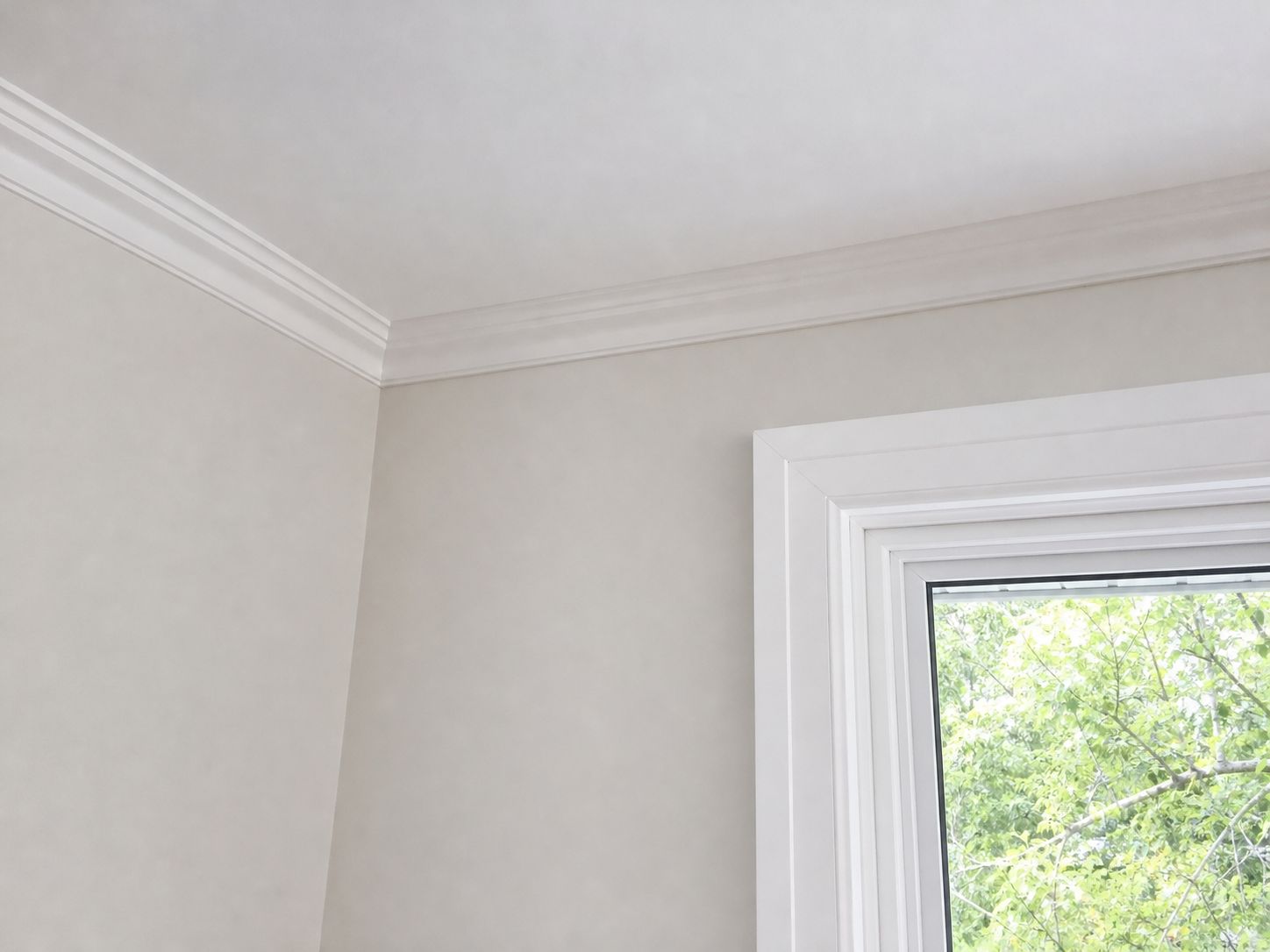
Ceilings are normally painted in a dedicated flat ceiling white, and trims in a water-based enamel that stays white rather than yellowing. The wall white should sit comfortably with both. Matching undertones across the three is the safest approach, while a crisper trim white against a softer wall white defines edges. Our guide to wall finishes, sheens and whites covers the technique, and our ceiling guide explains ceiling whites. Our wall painting Geelong work includes guidance on the right interior wall paint and sheen for each room.
Why does the same white look different in different rooms?
The same white looks different because light, undertone and surroundings all change how it reads. Warm bulbs and north-facing sun can push a white towards yellow, cool bulbs and south-facing light can push it towards blue or grey, and strong neighbouring colours reflect onto the wall. This is why a white on a shop chip rarely looks the same at home. Because the differences between whites are small, quotes for interior painting Geelong should name the specific product and sheen for each surface, so you know exactly what is going on your walls.
How should I test white paint?
- Paint a patch around 50 cm square, in two coats, on a primed board or on the wall itself.
- Hold it beside your floor, benchtop and cabinetry rather than on a blank wall.
- Look at it in the morning, the afternoon and under your lamps at night.
- Let the patch dry fully before judging, because water-based paint can look different when wet.
- Test two or three whites together so the differences are obvious.
It helps to have Geelong painters check your white samples in the room itself during the quote visit, in the light you actually live with.
When is professional advice worth it?
Whites are the hardest colour to judge because the differences are small. When you shortlist painters in Geelong, ask whether colour consultation and test patches are included in the quote.