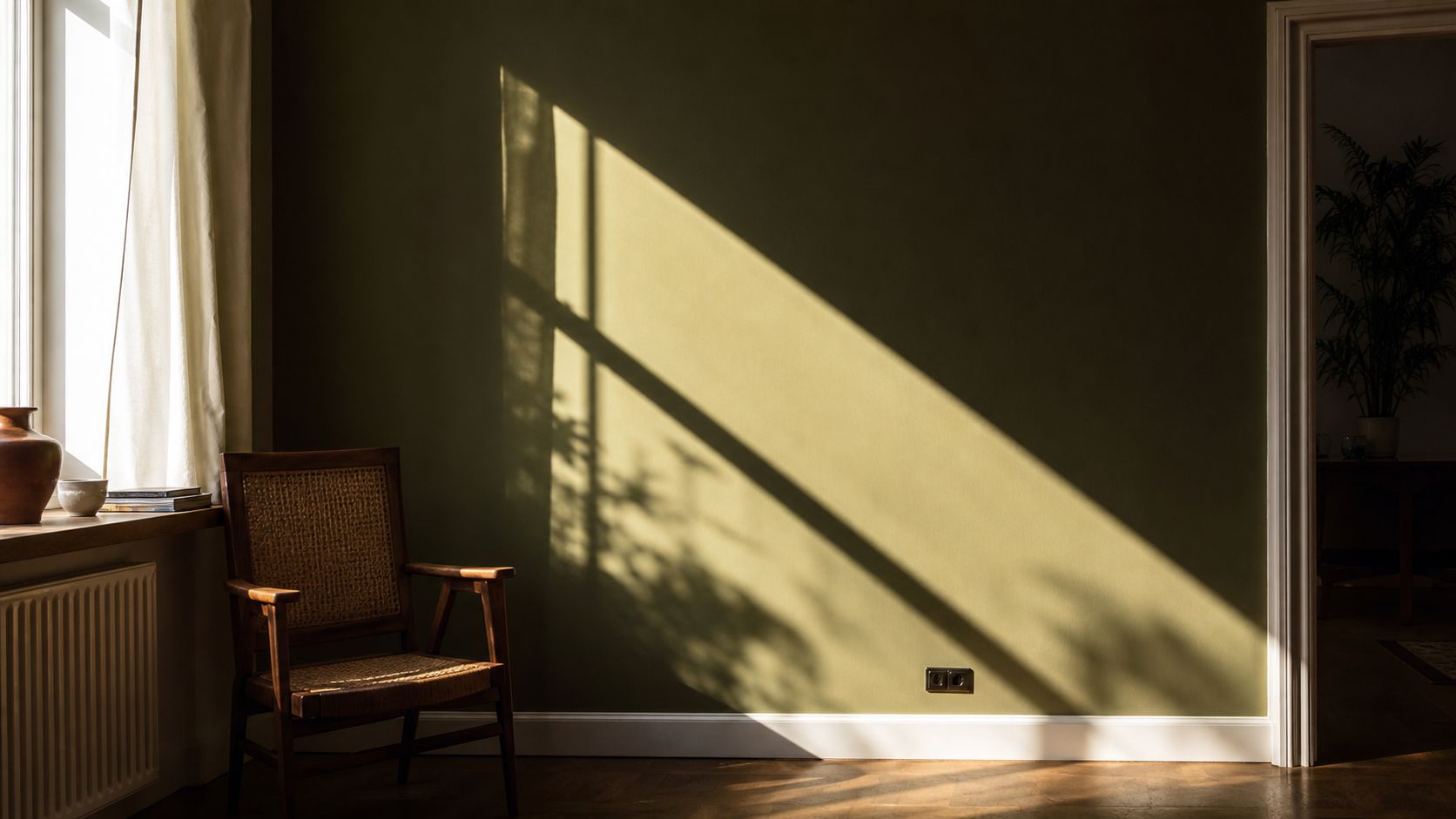
How does the direction a room faces change paint colour?
| Orientation | Light in Australia | Colours tend to look | What to do |
|---|---|---|---|
| North | The most direct sun across the day | Warmer and brighter | Check whites and creams don't turn yellow |
| South | The least direct sun, softer indirect light | Cooler and flatter | Favour warmer undertones so colour doesn't go grey or blue |
| East | Strong morning light, softer afternoons | Fresh and bright early, quieter later | View the sample early and late |
| West | Soft mornings, strong afternoon and evening light | Can shift warm and glowing late in the day | View the sample in late afternoon |
Colours also read differently under Geelong's southern light than they do on a swatch, which is why we recommend testing on your own walls. Our interior house painting Geelong service includes colour consultation based on the room's light, how it is used and your existing fixtures.
Why does paint look different in the morning and the afternoon?
Paint looks different across the day because the intensity and warmth of daylight change. Early and late light is warmer and softer, midday light is brighter and more neutral, and overcast days make most colours look cooler and quieter. A colour you love at 10 am can look different at 5 pm, so a decision made at one time of day is incomplete.
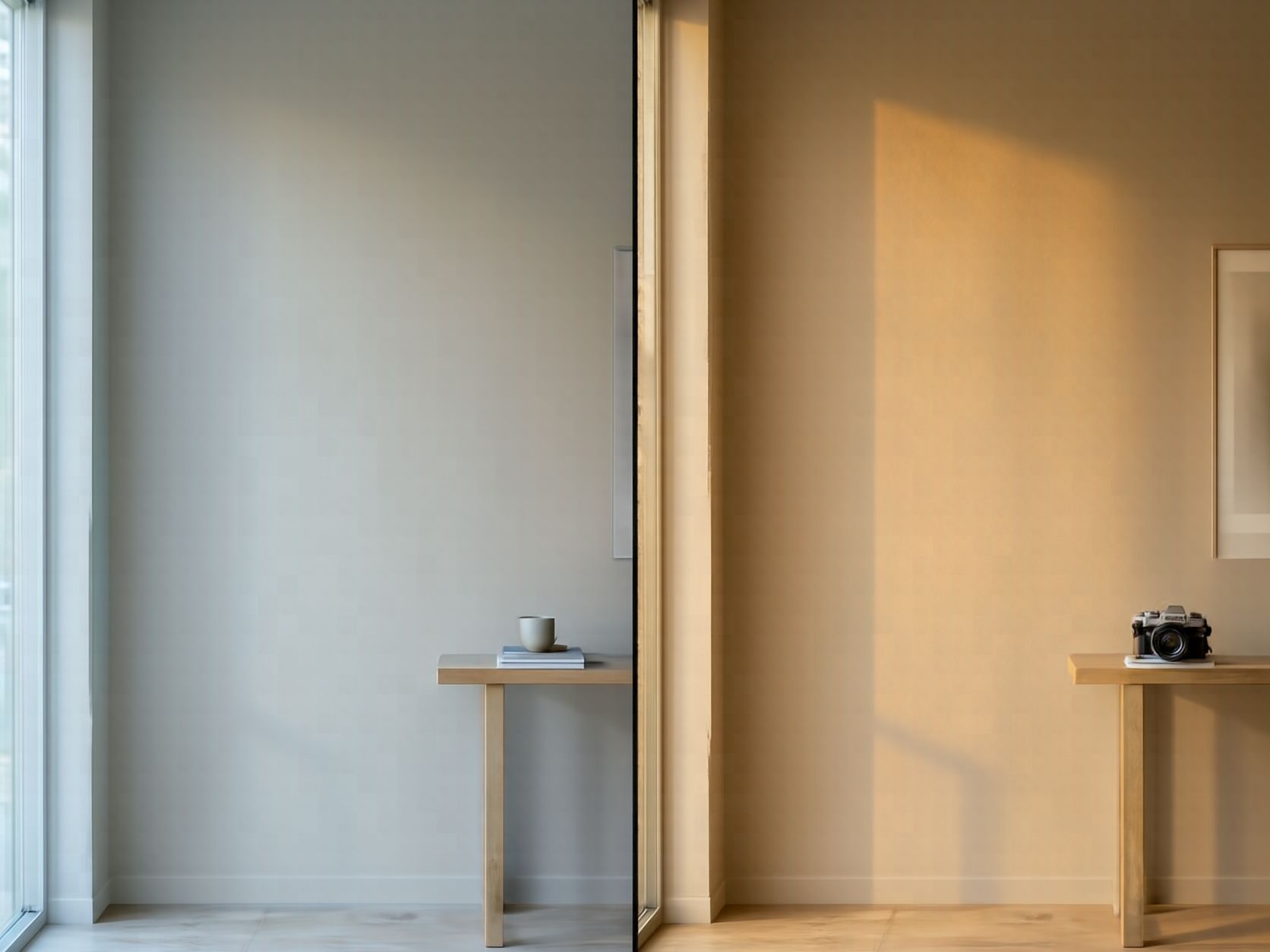
What is the difference between direct and indirect light?
- Direct sunlight boosts brightness and warmth and can make colours look stronger. It also shows surface imperfections more clearly.
- Indirect light is softer and more constant, and it reveals the true undertone of a colour more reliably.
- Shadows make parts of a wall look darker and cooler, so judge a colour in both lit and shaded areas.
Strong raking light also exposes plaster and patch repairs, so Geelong painters who check walls in raking light before quoting can tell you how a deeper colour will show them.
What else changes how a colour looks?
- Nearby colours: green gardens, red brick, timber floors and coloured furniture reflect onto walls.
- Finish: higher sheen reflects more light and can make a colour look lighter, while low sheen softens it.
- Artificial light: warm bulbs pull colours warmer and cool or daylight bulbs pull them cooler, so test under the bulbs you use at night.
How do I test paint in my own light?
- Paint a large patch.About 50 cm square, two coats, on a primed board or the wall.
- Move it around.Place it on the brightest wall and on a shaded wall, because the same colour can look different a metre away.
- Check three times.Morning, afternoon and evening, plus under lamps for rooms used at night.
- Compare beside fixed elements.Hold it next to the floor, benchtop and curtains.
- Decide after a day.The first look is rarely the one you live with.
During a quote visit, residential painters Geelong can place your samples on the brightest and darkest walls and check them with you at the time of day you use the room.
How do I choose colours for a very bright or very dark room?
In a very bright north-facing room, check that warm colours don't turn yellow and consider a neutral or slightly cooler tone. In a darker south-facing room, choose colours with a warm base so they don't go flat and grey. For habits that make a repaint last, see our tips for a lasting finish. For a single room, a straightforward interior painting Geelong job is often quickest once the sample is chosen.