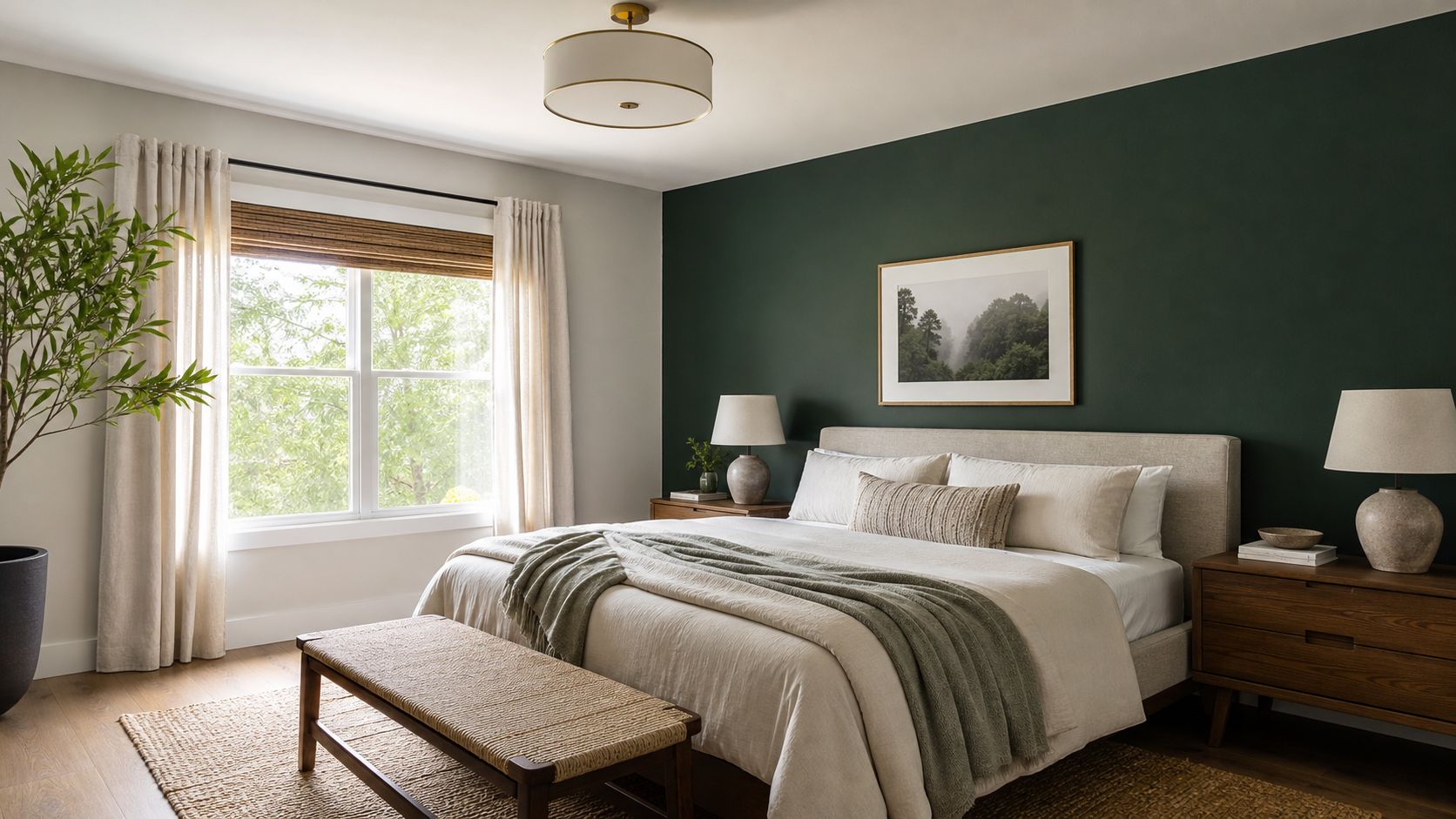
Which wall should be the feature wall?
The best feature wall is the one the room naturally faces. In bedrooms that is usually the bedhead wall, and in living rooms it is the focal wall behind the sofa or the television. Get the placement right and one wall changes the whole room; get it wrong and it reads as an unfinished paint job. If you are searching for painters near me to advise on which wall to choose, ask for a quote visit where they look at the room itself.
- Choose a wall with few interruptions. A wall broken up by several doors and windows rarely works as a focus.
- Choose the wall you see first when you enter, or the one that anchors the furniture.
- Avoid walls that get strong glare at the times you use the room, because strong colour is harder to live with in glare.
What are the best feature wall colours?
| Effect | Colour direction | Suits | Watch for |
|---|---|---|---|
| Dramatic | Deep green, navy, charcoal, aubergine | Bedhead walls, large living rooms with good light | Needs a tinted undercoat and careful preparation |
| Muted contrast | Sage, grey-blue, soft terracotta-leaning neutrals | Most rooms; easy to live with | Check the undertone beside the other walls |
| Tonal | Same colour as the walls, one or two steps deeper | Rooms where you want depth without contrast | Needs a large patch test; small differences are hard to judge |
| Light | Soft warm or cool tints | Small rooms or low light | May not read as a feature in strong light |
What colour should a bedroom feature wall be?
Bedrooms are used in the evening, so judge the colour under lamps and in early light. Deep greens, blues and charcoals are popular on bedhead walls because the bed and linen soften them, while muted tones suit smaller bedrooms. The other walls should stay calm and share a similar undertone. Deep bedroom colours need a tinted undercoat, so quotes for wall painting Geelong should state it.
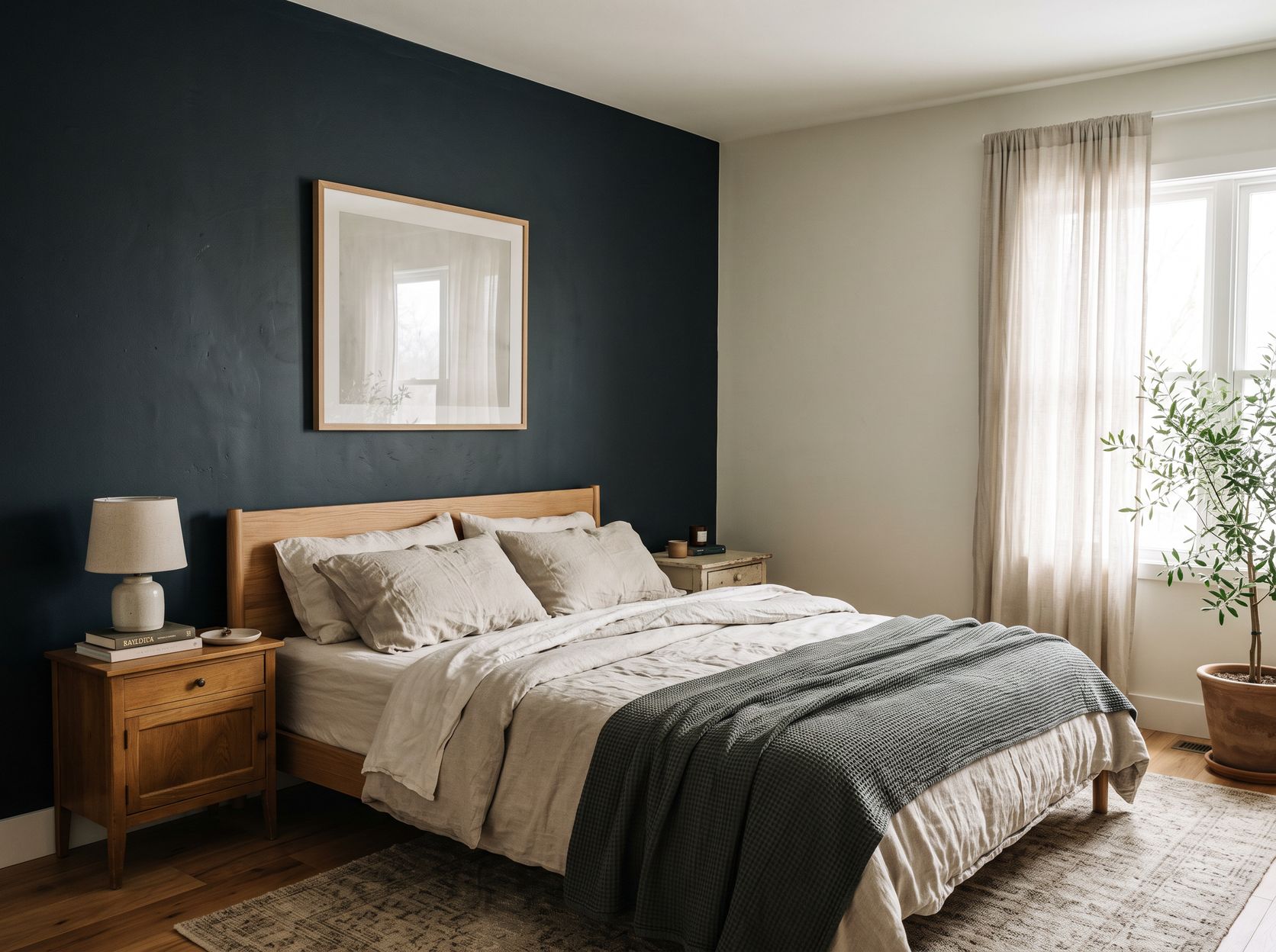
What colour should a living room feature wall be?
Choose a colour that works with the flooring and sofa, and check it at midday and in the evening. A living room feature wall behind a television or fireplace usually suits deeper colours, which help screens and joinery recede.
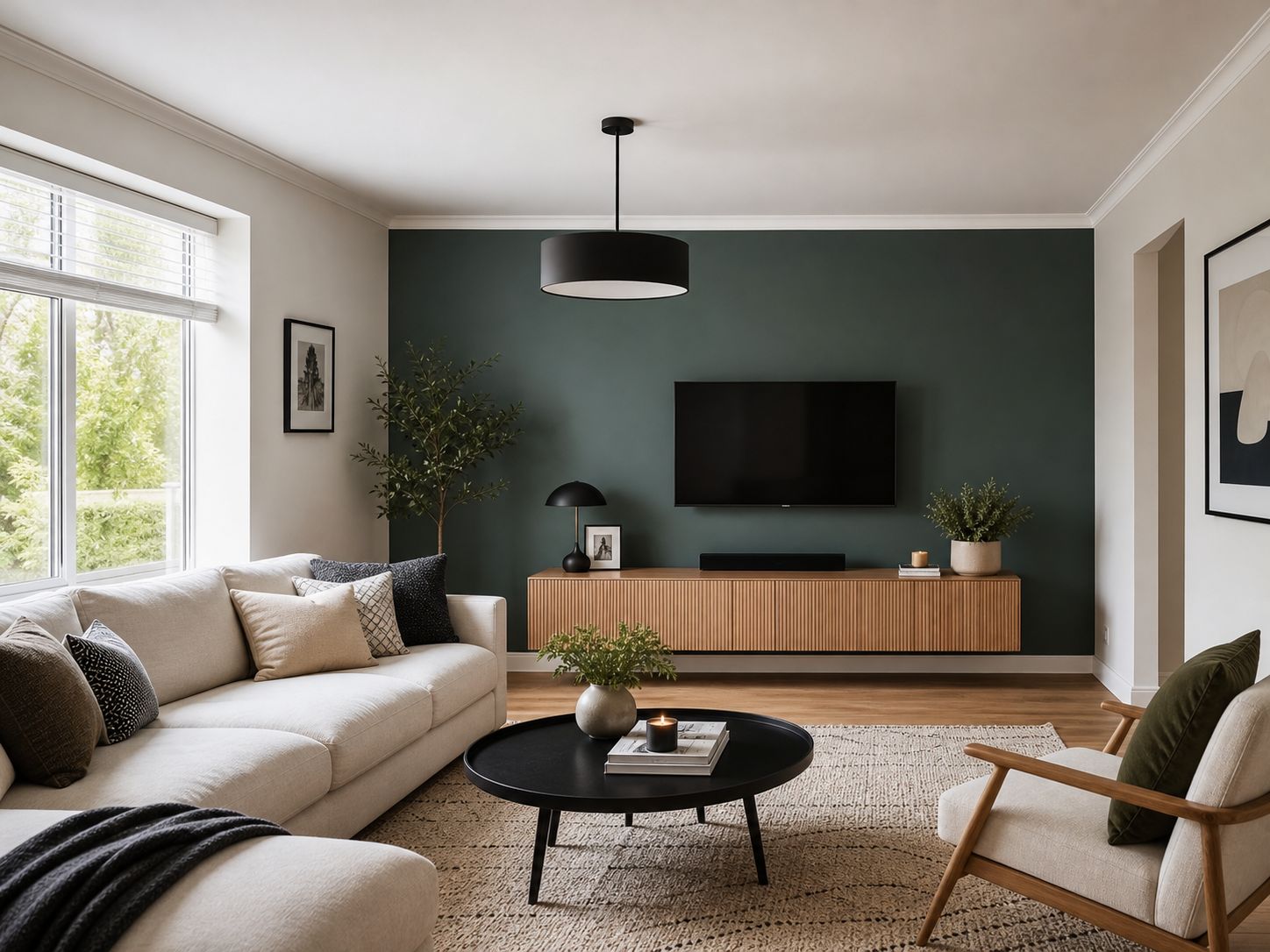
When is a feature wall not the right choice?
- In small, dark rooms where a deep wall can feel enclosing.
- In open-plan homes where a wall colour would split a continuous space at an arbitrary point.
- When the room has no clear focal wall.
- In rentals, where you would repaint before moving out.
How do I paint a deep feature wall properly?
Deep colours are primed with a tinted undercoat so they cover in two coats instead of four, and the edges between the feature wall and its neighbours need crisp cutting-in. Read our feature wall guide for the technique and finishes. Our feature wall painting Geelong includes colour consultation, and we help you pick the right wall, not just the right colour.
How do I choose and test?
- Pick the wall first.Stand in the doorway and see which wall the room faces.
- Shortlist two colours.One deep and one muted, so you can compare mood.
- Test a large patch.About 50 cm square, two coats, on the actual wall.
- Check lamp light.Strong colours change the most after dark.
Who can help?
A feature wall changes how the whole room reads, so it is worth a second opinion. Our interior house painting Geelong team confirms colours in writing before work starts, so the feature wall is cut in cleanly after the main colour.