What are the best paint colours for each room?
| Room | Colour direction | Finish | Check first |
|---|---|---|---|
| Living room | Warm or soft neutrals, muted greens and blues | Washable low-sheen | Flooring, sofa and light through the day |
| Bedroom | Muted, restful colours; deeper bedhead wall | Low-sheen | Evening and lamp light |
| Kitchen | Colours that suit cabinetry and benchtop | Mould-resistant low-sheen | Cabinet and splashback undertones |
| Bathroom | Colours that suit the tiles and fixtures | Mould-resistant low-sheen; mould-resistant ceiling | Tile undertone and bulb colour |
| Hallway or entry | Light, warm neutrals | Washable low-sheen | Artificial light and adjoining rooms |
| Home office | Calm, mid-tone or muted colours | Low-sheen | Glare from windows and screen light |
What colour should I paint a living room?
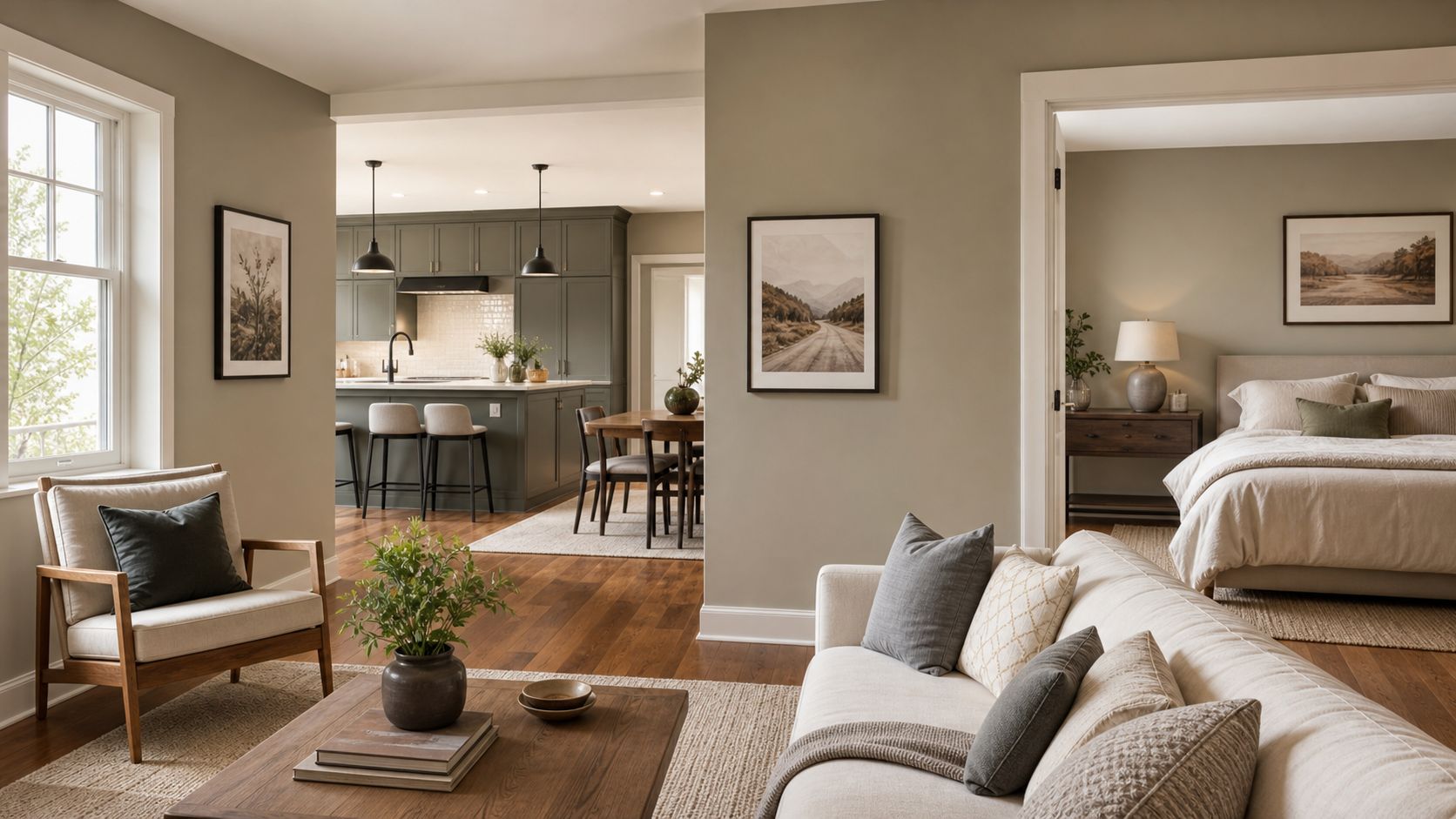
Choose a flexible colour that works across the day, because living rooms are used from morning to late evening. Start with the flooring and large furniture, then test warm neutrals or soft greens and blues on a large patch. Walls in family homes generally suit a washable low-sheen acrylic. If the room opens onto a kitchen, choose the wall colour with both spaces in view. In a lived-in home, residential painters Geelong can sequence the rooms so you are never locked out of the whole house.
What colour should I paint a bedroom?
Bedrooms are used mostly in the evening and early morning, so judge colours under lamp light and in early daylight. Softer or muted colours are a common choice for a restful room, but that is taste, not a rule. The bedhead wall is the feature wall homeowners ask for most, and deep colours there are primed with a tinted undercoat so they cover in two coats. Bedroom ceilings need a dedicated flat that hides every imperfection.
What colour should I paint a kitchen?
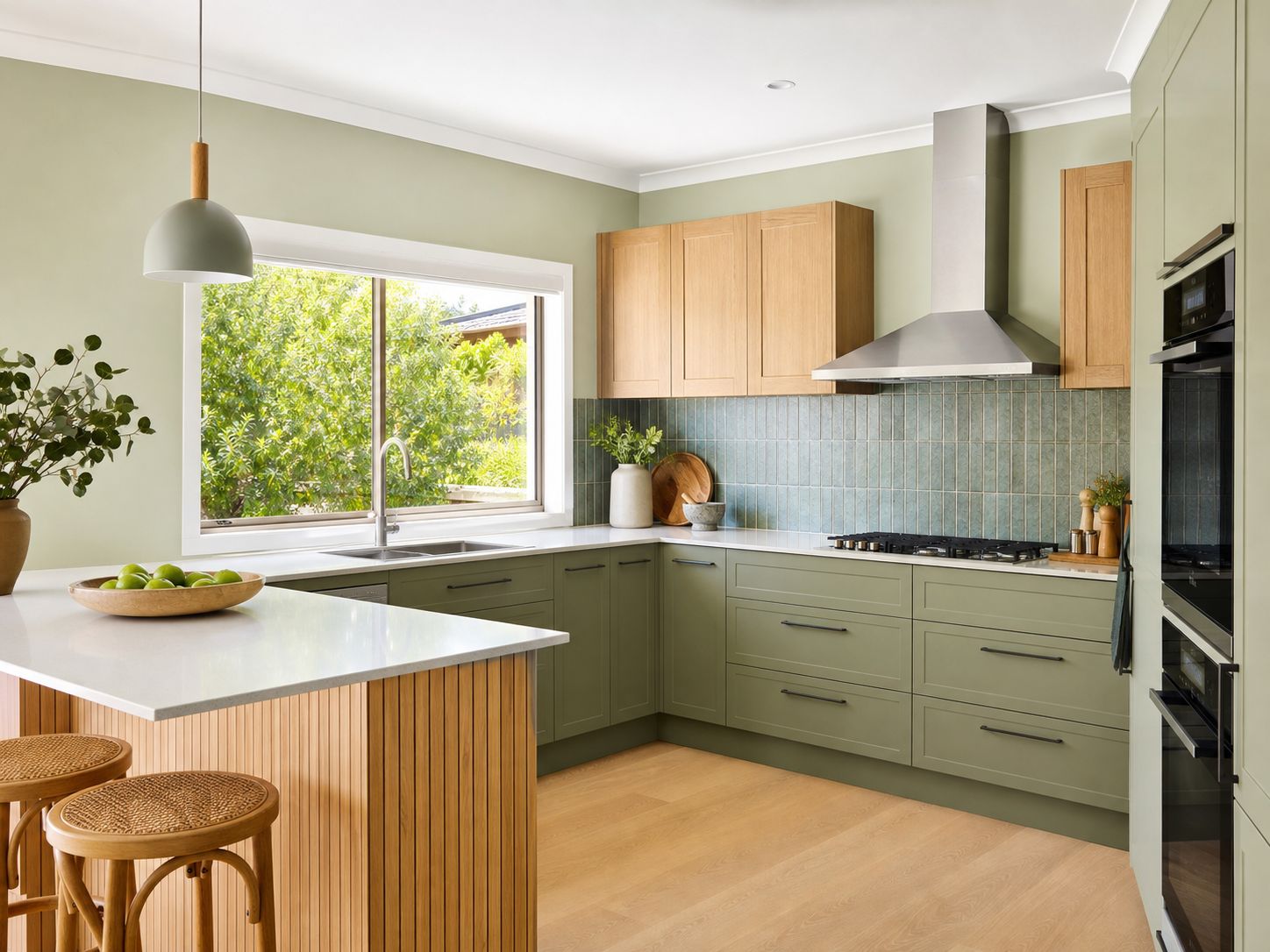
Choose a colour that suits your cabinetry, benchtop and splashback, because they are fixed finishes with strong undertones. Kitchen walls take steam and splashes, so a washable, mould-resistant low-sheen finish is the usual choice. Kitchen ceilings need stains and mould treated before painting rather than covered over. Kitchens carry steam and grease, so Painters of Geelong uses a mould-resistant finish on kitchen walls and treats ceiling stains and mould before painting.
What are the best bathroom paint colours?
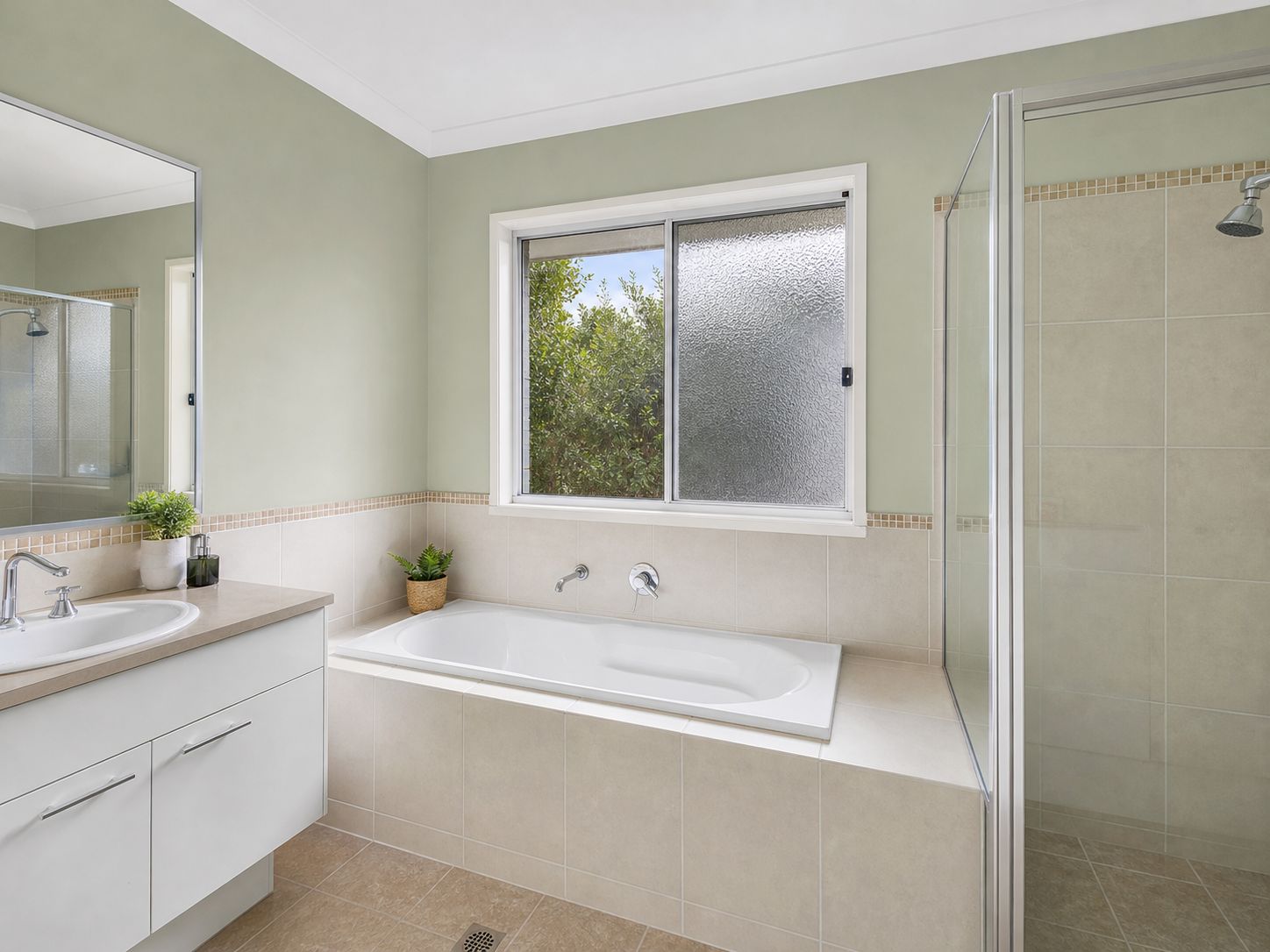
The best bathroom paint colours match the tile and fixture undertones, because the tiles are the largest fixed colour in the room. Above the tiles, use a mould-resistant, washable low-sheen finish. Bathrooms often rely on artificial light and a mirror that doubles it, so test samples under the bulbs you use. Bathrooms need a mould-resistant ceiling formulation, which is why quotes for interior painting Geelong should list the ceiling separately.
What about hallways, entrances and home offices?
- Hallways and entrances usually have little natural light, so light, warm neutrals work well. Use a washable low-sheen finish because hallway walls get brushed past daily.
- Home offices benefit from calm, mid-tone or muted colours. Check the colour for glare from windows and screens at the times you work.
Do I need to choose all the rooms together?
Yes, at least in broad terms. Rooms that share a line of sight should sit comfortably together, and consistent ceilings and trims tie the house together. For units, our unit and rental guide explains how repaints are scoped and priced, and our ceiling guide and feature wall guide cover those surfaces. Our interior house painting Geelong team confirms colours in writing before work starts, and quotes list each room and surface separately, so you can see the cost of each choice.
Shortlist your colours with the free Home Painting Checklist
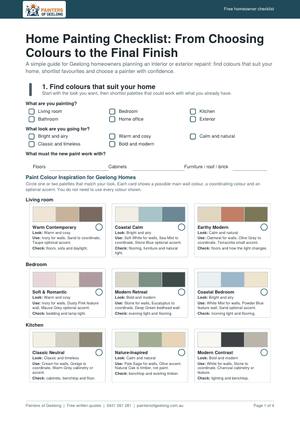
The checklist turns this guide into a worksheet: choose the look you want, circle the palettes you like for each room, and record your final choices before you talk to a painter.
- Room-by-room palettes for the living room, bedroom, kitchen, bathroom and home office, each showing which colour could be the main wall colour.
- A colour record for your preferred palette and final colour names or codes.
- Prompts to test large samples beside your floors and cabinets.
Free, four pages, for your phone or printed. Palettes are illustrative, not exact paint colours.