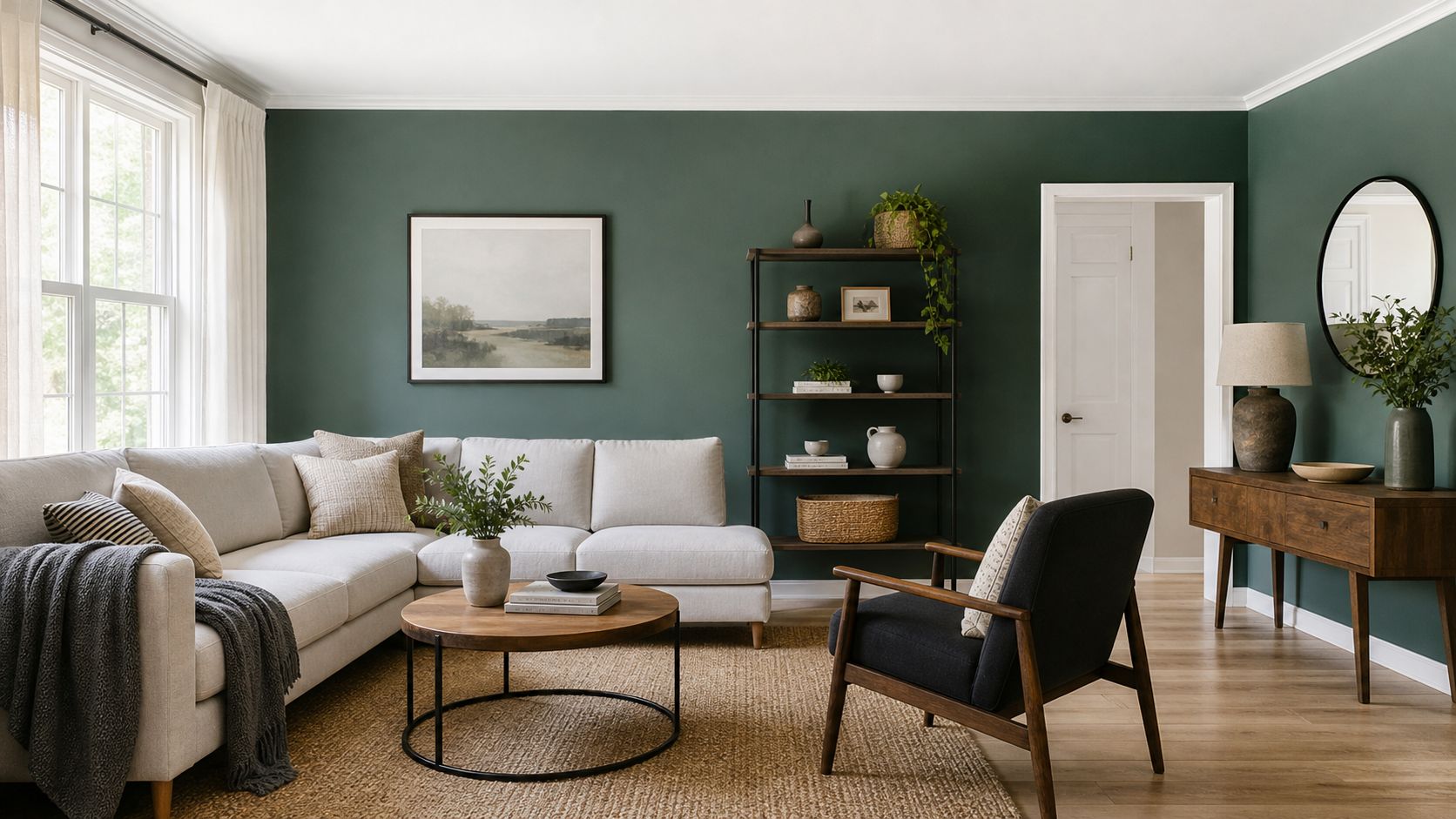
What are the options for walls, ceilings and trim?
| Approach | The look | Works when | Watch for |
|---|---|---|---|
| Standard: white ceiling, coloured walls, white trims | Clean, familiar, edges defined | Almost any room; the safe default | White trims that clash with the wall undertone |
| Tonal: one colour family at different strengths | Soft, layered, cohesive | You want depth without strong contrast | Needs careful testing so the tones don't look muddy |
| Colour drenching: one colour on walls, ceiling and trims | Enveloping, modern, deliberate | Bedrooms, studies, rooms you use at night | Small, dark rooms can feel heavy; preparation shows |
| Contrasting trims: coloured walls, darker or coloured trims | Graphic, architectural | Decorative profiles or a strong design intent | Needs crisp cutting-in and sanded surfaces |
What is colour drenching?
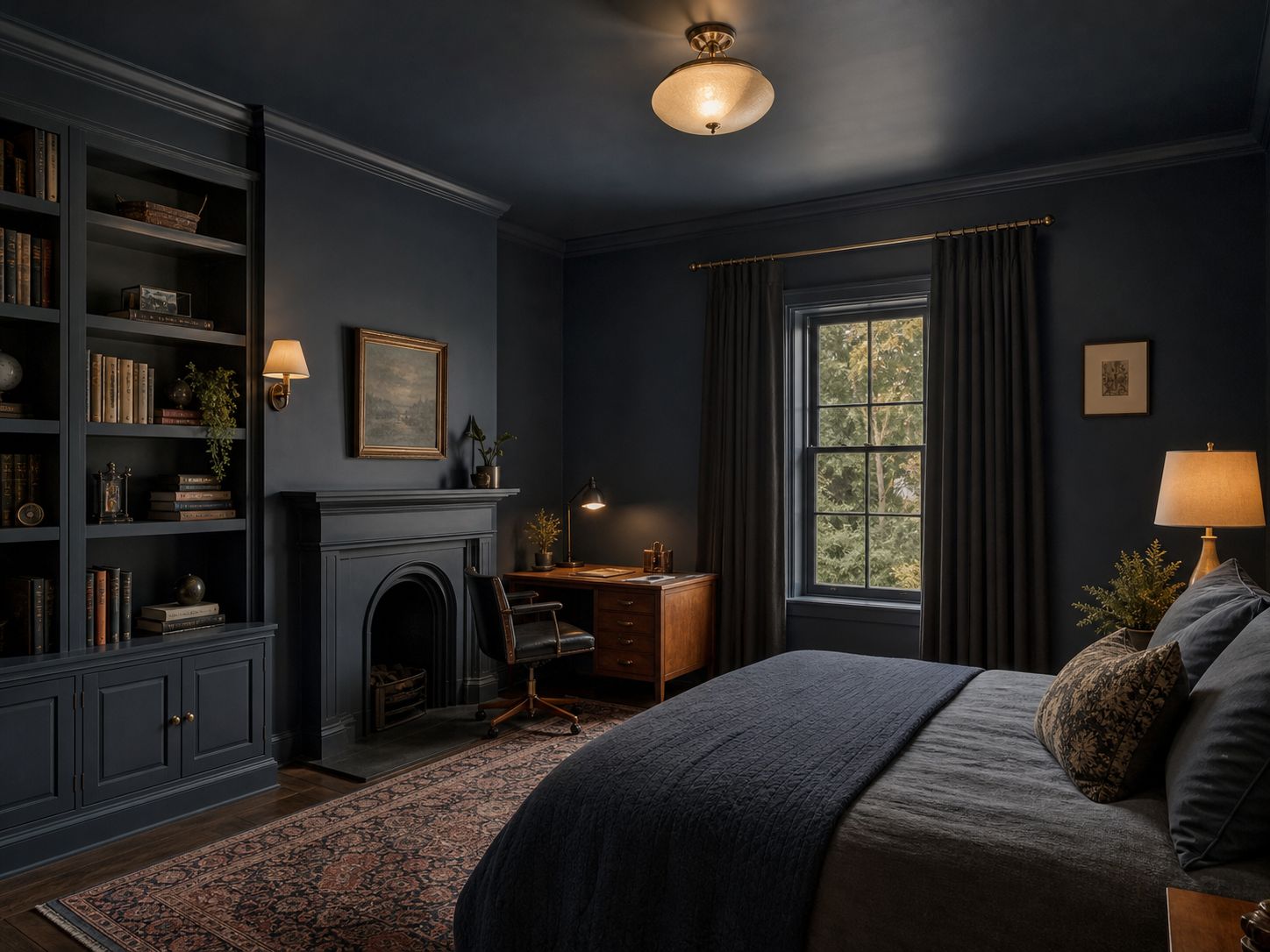
Colour drenching means painting the walls, ceiling and trims, and sometimes the doors, in the same colour. Because ceilings, walls and trims are normally finished differently, the same colour looks slightly different on each: ceilings are painted in flat, walls in low-sheen and trims in water-based enamel. That difference gives the scheme subtle variation even though the colour is the same.
It works best where you want the room to feel enclosed and calm, such as a bedroom, study or media room. It suits rooms with enough light to carry a deep colour, and it needs good preparation because the flat ceiling hides imperfections but the trims and walls reveal them. Because deep colours show every imperfection, our interior house painting Geelong process washes, fills, sands and primes first, with a tinted undercoat so the colour covers in two coats.
Should the ceiling be the same colour as the walls?
Usually not. Ceilings are most often painted in a dedicated flat ceiling white, which hides imperfections and reflects light evenly, and a white ceiling keeps most rooms feeling bright. Matching the ceiling to the walls can blur the edges and make the room feel continuous, but in a small or dark room it can also feel heavy. See our guide to ceiling guide for the details. Our ceiling painting Geelong jobs are quoted on height, condition and repairs, and water stains need a stain-blocking primer first or they bleed through new ceiling paint.
What colour should skirting boards, architraves and doors be?
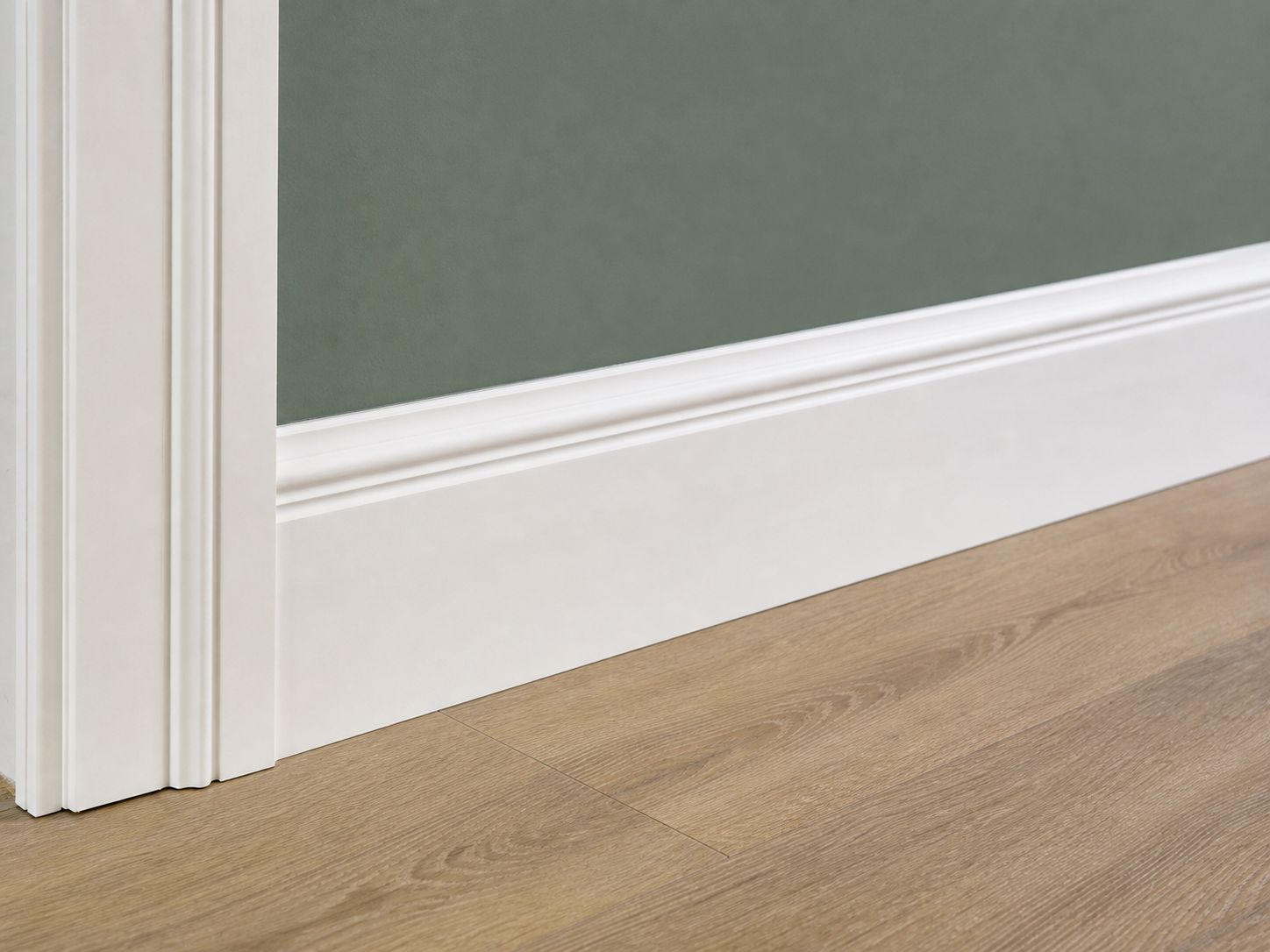
White or a light colour in a hard-wearing water-based enamel is the most common choice because it frames the walls cleanly and stays white rather than yellowing. You can also match trims to the walls for a softer, more continuous look, or use a darker colour for contrast. Traditional homes with decorative profiles often keep trims light so the detail stays visible, while modern plain trims suit matching or tonal schemes.
Trims are finished last, after ceilings and walls, and they are sanded between coats to avoid brush marks. Our trim guide covers the products and preparation. Our wall painting Geelong and trim work are sequenced ceilings first, then walls, then trims last, which keeps edges crisp.
What about coving and cornices?
There is no single rule. Many painters match coving to the ceiling to keep a clean line at the top of the room, while matching it to the walls is also valid. Decide based on the look you want: ceiling colour keeps the room feeling tall, wall colour makes the ceiling feel lower and more enveloping.
Does ceiling height change the decision?
- Low ceilings: a bright ceiling lifts the room, while drenching can work if you want a cosy feel.
- High ceilings: a deeper ceiling colour brings them down and adds warmth.
- Plain flat ceilings: matching the wall colour is simpler than on a ceiling with deep cornices.
How do I choose?
- Decide the mood.Open and bright points to the standard approach, enveloping and calm points to tonal or drenching.
- Check the room's light.Deep colours need enough light or deliberate lamp lighting.
- Check the trims.Decorative profiles are usually worth showing; plain trims can disappear.
- Test the full set.Paint samples on the wall, a board for the trim and a patch overhead if you can.
At Painters of Geelong, we test the full set, ceiling, walls and trim, on your own walls before you commit.
Who should paint it?
Dark colours show every imperfection, so the preparation matters more than usual. If you are comparing quotes, check that your chosen interior painters Geelong list the ceiling, walls and trims separately.