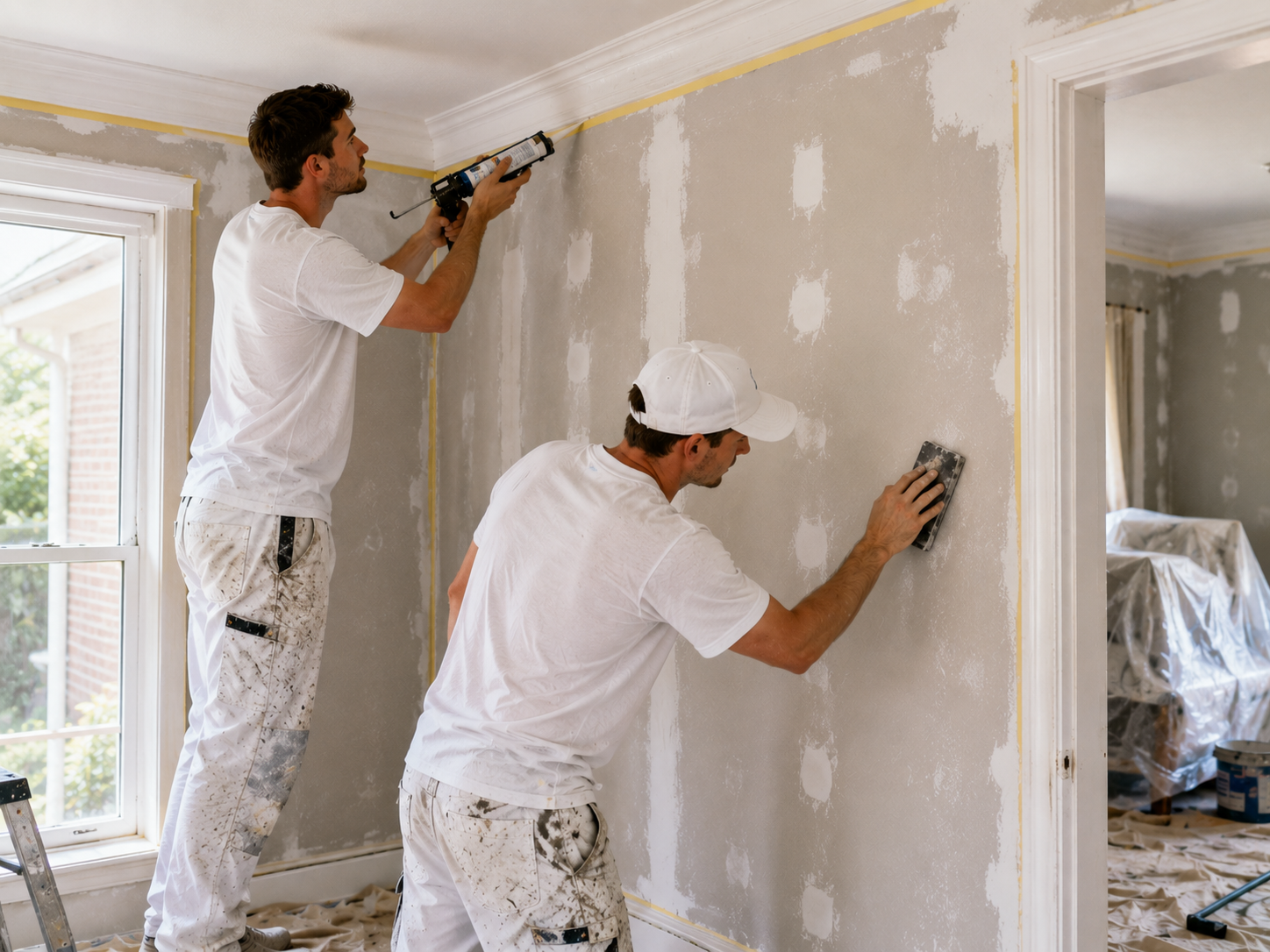
Search interior house painting hacks and you'll find a lot of gimmicks — rubber bands on paint tins, coffee filters as tack cloths. The real professional advantages are less photogenic: they're small habits, applied consistently, that compound into a visibly better finish. These are the twelve worth actually adopting, whether you're painting one wall or engaging our interior house painting Geelong team, or hiring out a whole-house interior repaint and want to know what good work looks like — the standards our interior painting team brings to every job.
Before You Open a Tin
1. Box your paint. Buy all the paint for a colour at once and mix the tins together in one bucket ("boxing"). Colour varies fractionally between batches — boxing guarantees wall three matches wall one.
2. Do the unglamorous prep — proper interior painting preparation. Wash with sugar soap, fill every hole, sand the fills flush, caulk the trim gaps. Around 60–70% of a professional job is preparation, and it's the single biggest difference between finishes that last ten years and two. (Full prep sequence in our wall painting guide.)
3. Map your sheens before buying. Flat for ceilings, washable low-sheen for walls, semi-gloss water-based enamel for trims and doors. One trip to the trade store, zero mid-job surprises.
4. Check the weather, even indoors. Paint cures best at 10–30°C with moderate humidity. A 38-degree afternoon makes paint dry too fast and show every lap mark.
While You Paint
5. Work top-down, always. Ceiling, then walls, then trims. Splatter falls — make it fall on unpainted surfaces. (The full room sequence is in our ceiling painting guide.)
6. Cut in one wall at a time. Not the whole room. The brushed edge needs to still be wet when your roller meets it, or the border dries as a visible halo.
7. Keep a wet edge religiously. Roll in metre-wide vertical sections, always overlapping into wet paint. Stopping mid-wall for lunch is how permanent lap marks happen.
8. Load the roller properly. A starved roller leaves stipple and pressure marks; you should be re-loading every square metre or so. Cheap sleeves hold less paint and shed lint — buy the good one.
9. Pull tape while paint is soft. Quality painter's tape, pressed down firmly, removed when the final coat is touch-dry but not cured, gives razor-sharp lines. Wait until fully hardened and the paint can tear along the edge.
The Finishing Habits
10. Sand between enamel coats. A light pass with 240-grit between trim coats knocks down dust nibs and gives the next coat grip. This single habit is most of the difference between professional and DIY trim work.
11. Inspect in raking light. Professionals do their final check with light skimming across the surface — a torch held flat against the wall reveals every miss, run, and thin patch before it becomes a callback.
12. Label and store your leftovers. Write the room, colour name, and date on each tin. Touch-ups two years from now become a five-minute job instead of a colour-matching expedition.