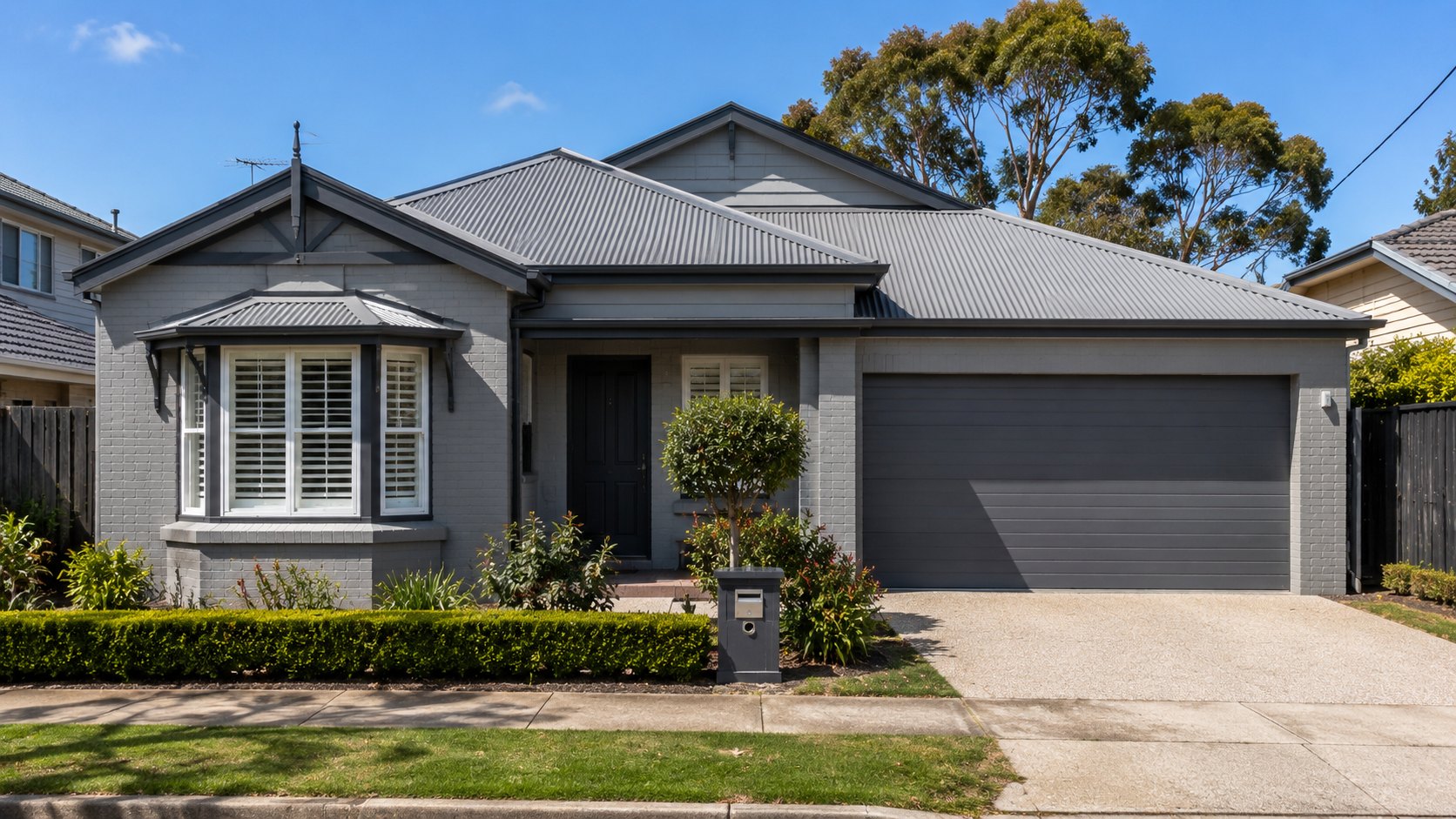
Treating brick, weatherboard, render, trims and eaves as one coordinated repaint — not a patchwork of separate jobs done over the years.
Why Treat the Whole Facade as One Job
Many homes end up with a mismatched exterior simply because surfaces get painted separately over the years — the fence one year, the fascias another, a feature wall touched up in between — often in slightly different whites or trim colours as products and paint batches change. A full-envelope repaint avoids this by planning brick, weatherboard, render, trims and eaves together from the start, with one colour palette and one paint schedule applied consistently across every surface — the same coordinated approach behind our exterior home painting Geelong service.
This matters most on homes with mixed materials — a brick-veneer base with weatherboard gable ends, for instance — where a coordinated approach makes the whole facade read as one cohesive design rather than a collection of separately-treated parts. Weather-resistant exterior paint Torquay jobs need this approach for coastal cladding, where salt exposure means every surface on the facade needs a consistent system. Homeowners booking exterior painters Grovedale-wide for newer builds going up in the area need it too, so the full colour scheme is right from the first coat rather than a patchwork look later — the standard any proper exterior painting services Geelong provider should be building toward.
What a Full-Envelope Repaint Covers
- Weatherboard sections, prepped and primed to their own substrate-specific system
- Brick or rendered sections, with masonry-grade primers where needed
- Trims, fascias, gutters and barge boards in a coordinated or contrasting trim colour
- Garage doors, sprayed to match the overall scheme
- Front fences, where visible from the street as part of the facade
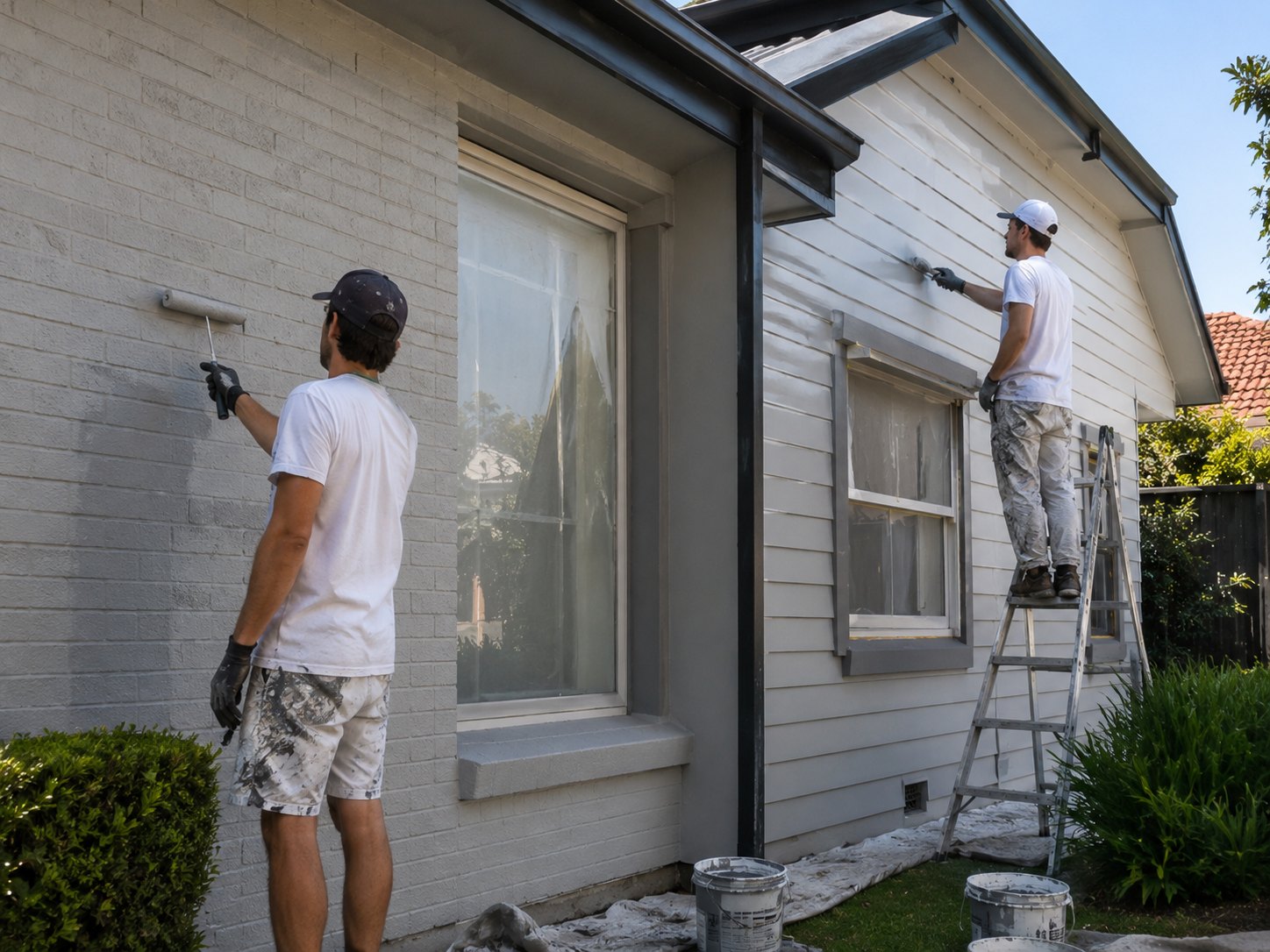
Modernising an Older Facade with Colour
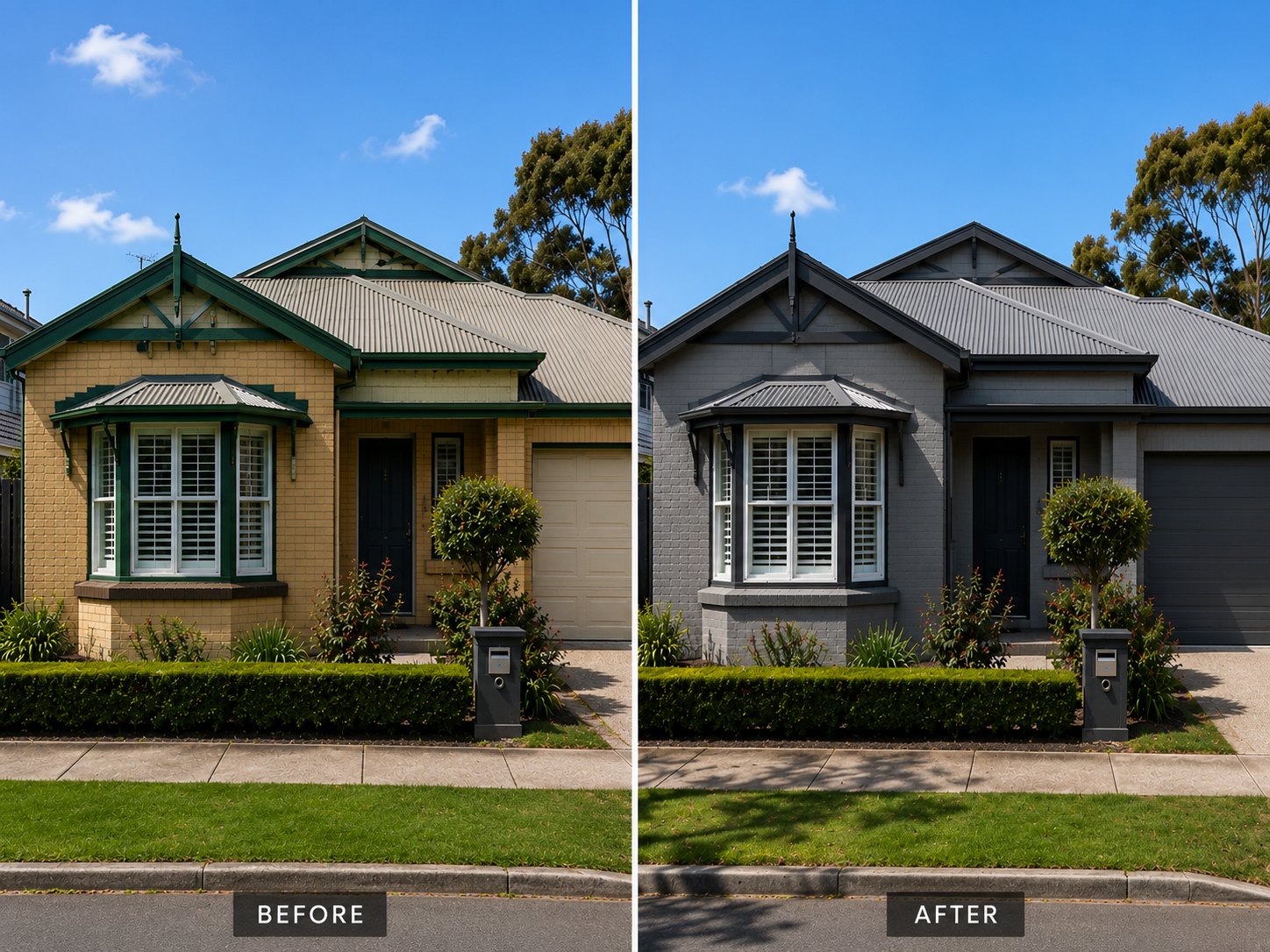
A full-envelope repaint is also the easiest way to genuinely modernise a dated facade without structural work. Colour selection matters as much as the paint system itself here — warm greys, deep charcoals and soft neutrals are currently the most popular choices for contemporary Australian exteriors in residential painting generally, usually paired with a contrasting darker trim on window frames and fascias for definition. Heritage-appropriate palettes on period weatherboard cottages often modernise the finish without fighting the home's original character, while newer builds have more freedom to go bolder with a feature colour on an entry portico or garage door.
True Victorian-era homes call for a different approach again — heritage colour schemes typically use deeper, richer tones (bottle green, burgundy, deep cream, or Indian red) on trims and detailing against a lighter body colour, reflecting the palettes genuinely available when these homes were built. Councils with heritage overlays, including parts of central Geelong, can have specific requirements here, so it's worth checking before finalising a scheme on a heritage-listed facade. Whatever the palette, the paint system underneath still needs to deliver real weather protection — colour is the part everyone notices, but it's the last coat that actually does the protecting.