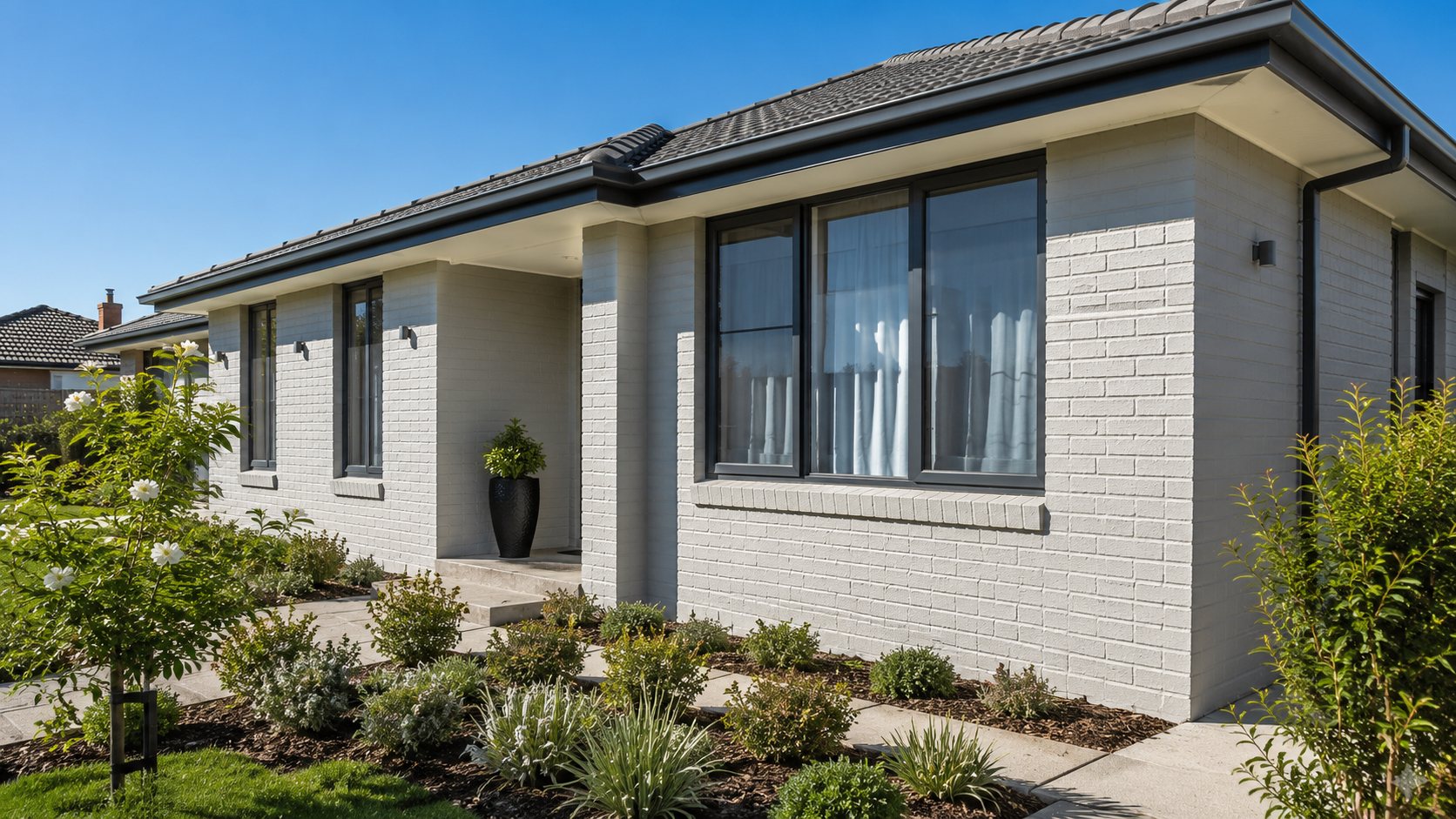
Before primer types and paint systems — the honest question worth asking first: is painting brick houses a good idea for yours? Then, how brick house painters Geelong homeowners trust actually do it properly if the answer is yes.
Should You Paint Your Brick At All?
This is worth settling before anything else, because painting brick is effectively a one-way decision — and it's the first thing our exterior brick painting specialists talk through on-site, before anyone reaches for a paint sample. Unpainted brick and rendered brick that's already coloured through are close to maintenance-free — they can go decades without attention. The moment you paint brick, you've committed to a repaint cycle roughly every 10–15 years for as long as you own the home, because paint film breaks down under UV and weather in a way raw brick simply doesn't.
That doesn't mean painting brick is a mistake — plenty of homeowners paint brick for a genuine style refresh, to unify mismatched brick tones, or to modernise a dated 1970s–80s brick veneer. Brick painting Belmont jobs are usually exactly this, given how much brick veneer lines those family-home streets. In newer pockets covered by exterior house painting Highton requests, it's more often a case of unifying a feature brick wall with the rest of a contemporary facade. It just means the decision should be made with eyes open, not as a default "improvement."
This guide covers exterior brick painting Geelong homeowners actually need — whether that's a render and brick painting job across the whole house, a targeted brick facade painting refresh on one wall, or simply comparing brick wall painting contractors before booking anyone. The same fundamentals apply whether you're updating one of the many painted brick homes Geelong already has, or considering painting brick for the first time.
Pros and Cons of Painting a Brick House
- Pro: Instantly modernises a dated 1970s–80s brick veneer or unifies mismatched brick tones.
- Pro: Wider colour choice than render alone, and generally cheaper than a full render job.
- Con: Commits you to a repaint cycle roughly every 10–15 years, indefinitely.
- Con: Can divide buyer opinion at resale — some prefer original brick.
- Con: Poor prep (skipped efflorescence treatment, wrong primer) causes failure much faster than on other substrates.
How to Tell If Brick Is Already Painted, Rendered, or Coloured-Through
Find an inconspicuous spot — behind a downpipe or under a window sill — and gently scratch or chip the surface. If the colour runs all the way through, it's coloured-through render or oxide-coloured brick and doesn't need paint. If there's plain grey, white, or a different colour underneath just the top layer, it's already been painted or rendered and coated, and a repaint is simply continuing what's already there.
How to Prepare Brick Before Painting
Surface preparation is where most residential painting jobs on brick actually succeed or fail — brick's porous nature means shortcuts here show up within a year or two, not a decade.
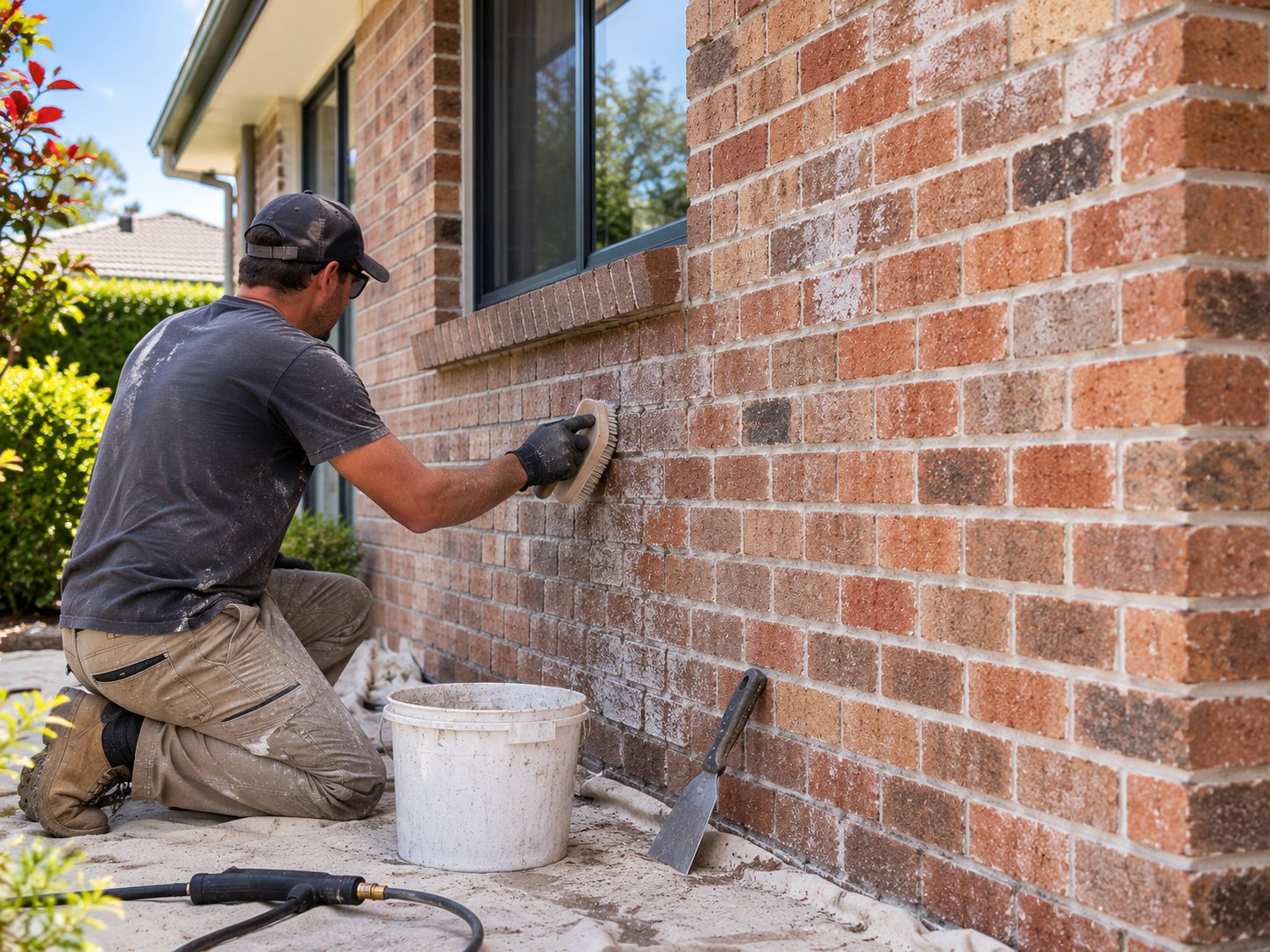
- Pressure wash to remove dirt, moss, and loose material — brick's porous surface holds grime that stops paint bonding properly.
- Repair cracks in render with a flexible masonry filler before painting; painting over active cracks just telegraphs them through the new coat.
- Treat efflorescence — the white, powdery salt deposits common on brick — by brushing it off and letting the wall dry fully. Painting over active efflorescence traps moisture and causes the paint to blister.
- Prime with a masonry-grade, alkali-resistant primer. Brick and render are highly alkaline when new or recently repaired, and standard primers can react and fail. A proper masonry primer blocks this and gives the topcoat something to grip.
Choosing a Paint System for Brick
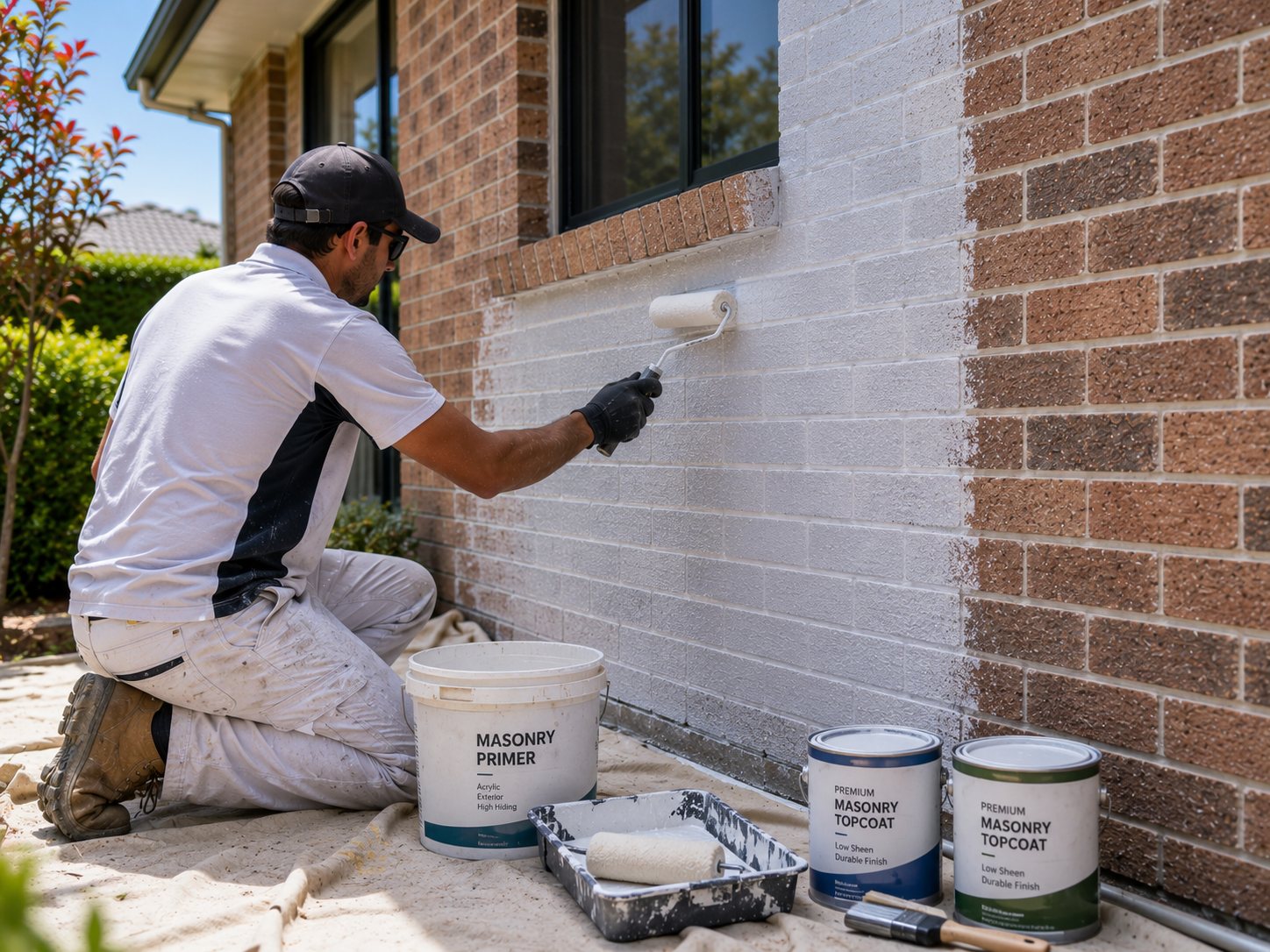
The best paint for exterior brick walls is a breathable 100% acrylic masonry paint — "breathable" matters more on brick than almost any other surface, because brick and render need to let residual moisture escape. A non-breathable film traps moisture behind it, leading to blistering and premature failure rather than genuine weather protection. Two coats over a properly primed surface gives full opacity and the best long-term result, which is exactly what any competent exterior painting services Geelong provider should be building into a brick quote.
What Does Brick Painting Cost in Geelong?
Painting existing brick or render in Geelong typically costs $25–$38 per square metre, or $7,000–$13,000 for a standard single-storey home — slightly less per square metre than weatherboard, since brick generally needs less surface repair than aged timber, though render crack repair can push costs up. See our Residential Exterior Painters Geelong service page for what's included, or the full exterior painting cost guide →