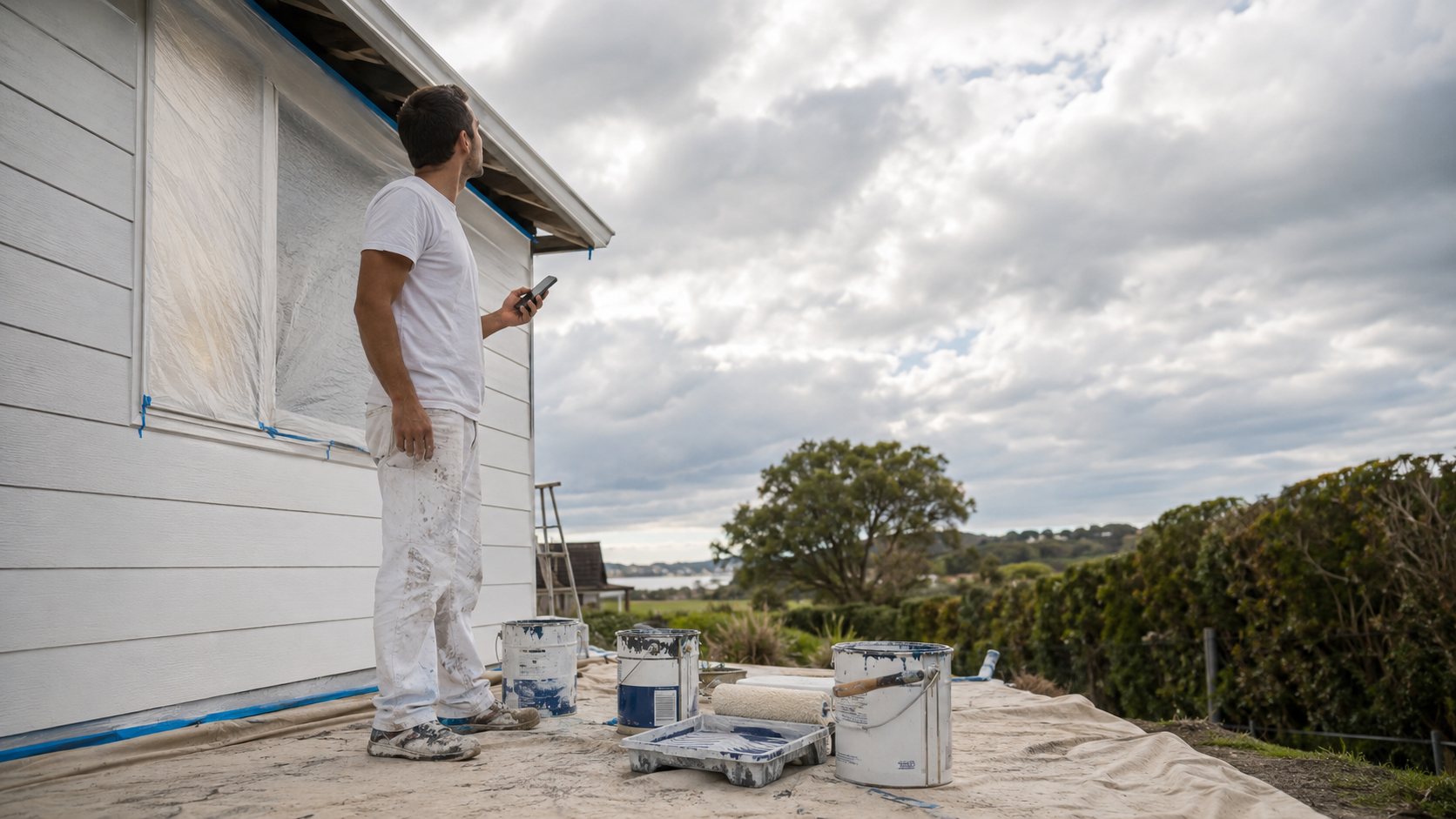
Timing, technique, and the small habits our exterior painters Geelong crews rely on to separate a repaint that lasts 10 years from one that fails in three.
The Best Time of Year to Paint an Exterior in Geelong
Late spring through autumn — roughly October to April — gives the most reliable painting weather in Geelong, and it's the window our professional exterior painting team books most jobs into. October itself isn't too late to start; it's actually one of the better months, sitting before the peak summer heat that makes paint dry too fast to finish properly, and well before winter's rain and cold slow everything down and push out schedules. This timing holds whether you're booking exterior painters Lara-wide for an established suburb or house repainting Grovedale for a fresh new build.
Weather Rules Professional Painters Follow
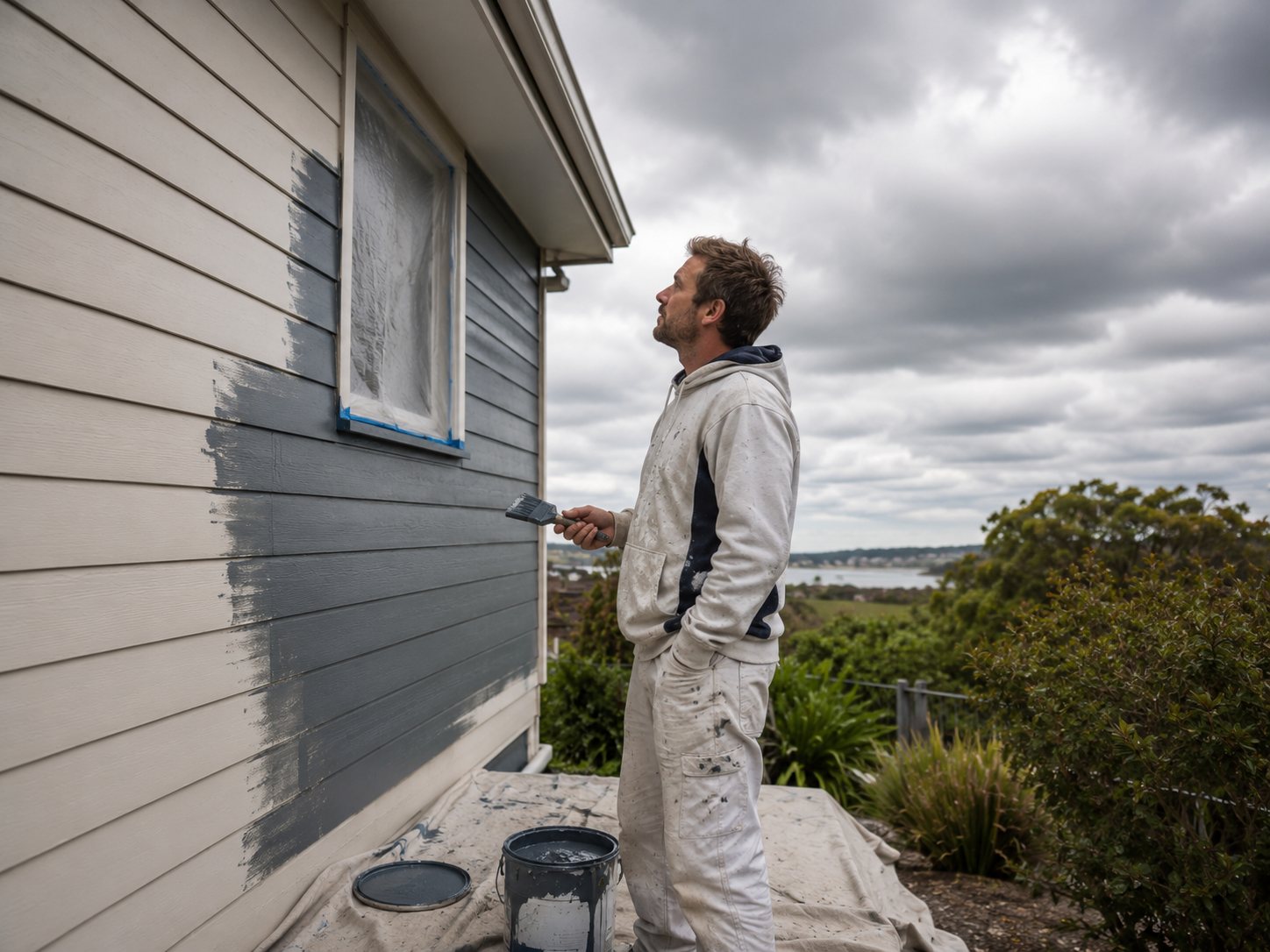
- No painting within a few hours of forecast rain — fresh paint can wash out or spot before it cures.
- Avoid direct, hot afternoon sun on the wall being painted — it dries the surface too fast, causing lap marks and poor adhesion. Painters typically follow the shade around the house through the day.
- Skip high-wind days — wind blows dust and debris into wet paint and dries it unevenly.
- Check humidity, not just rain — very humid days slow drying between coats even without rain falling.
Technique Habits That Make the Difference
These are the habits that separate our exterior house painting services from a DIY attempt, regardless of which surface you're working on:
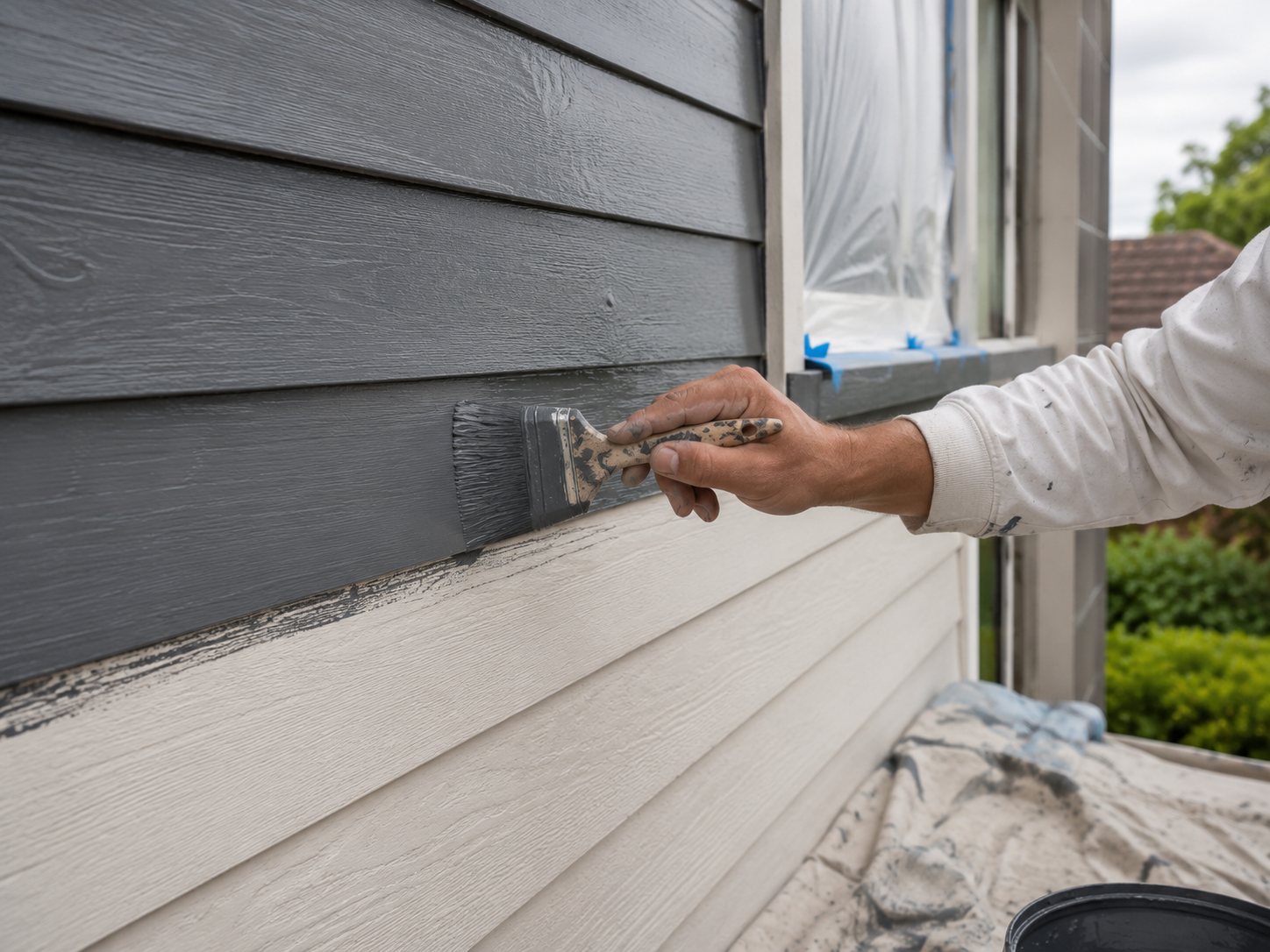
- Keep a wet edge. Always roll or brush back into paint that hasn't started to dry — working in sections and overlapping while still wet avoids visible lap marks, especially on weatherboard's horizontal runs.
- Cut in before rolling. A neat brush line along edges, trims, and corners — done one section at a time so it's still wet when you roll up to it — gives a cleaner paint finish than rolling first and cutting in after.
- Don't skimp on tools. A quality brush and roller sleeve hold more paint and shed less lint into the finish than cheap ones — false economy shows up immediately in the result.
- Two coats, always. One coat rarely gives even colour depth or the full protective film thickness a quality exterior coating needs to actually deliver weather protection, regardless of what the tin promises.
- Don't rush exterior paint preparation. It's the least glamorous part of the job and the one most often shortcut — but it's what determines whether the paint lasts 7-10 years or fails within 2-3.