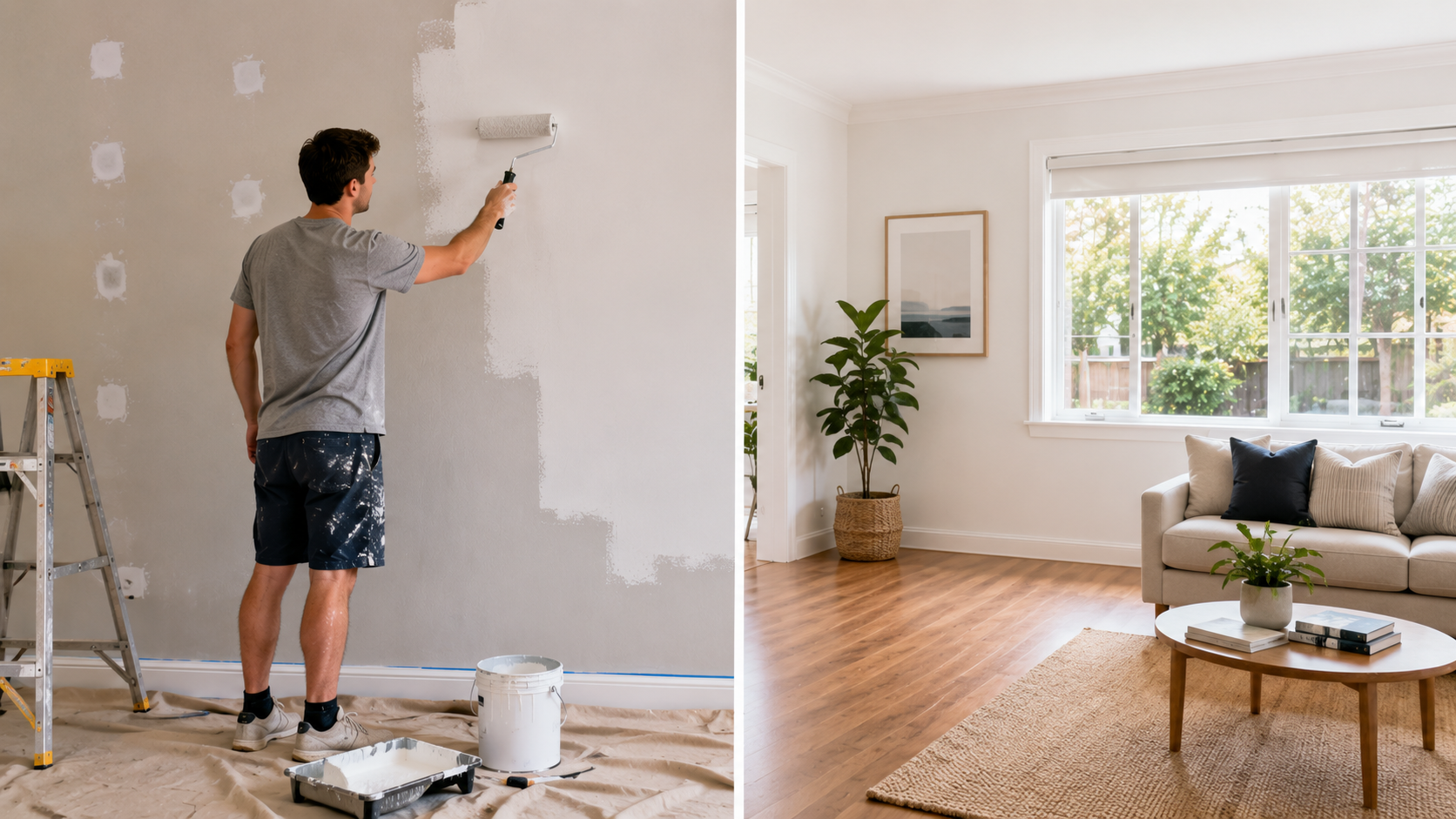
Can I paint my house interior myself? Yes — painting is one of the few trades genuinely open to a careful amateur. The better question is whether you should, and that depends entirely on the project. A bedroom refresh and a whole-house interior house painting project are different undertakings wearing the same name, and the honest answer flips between them.
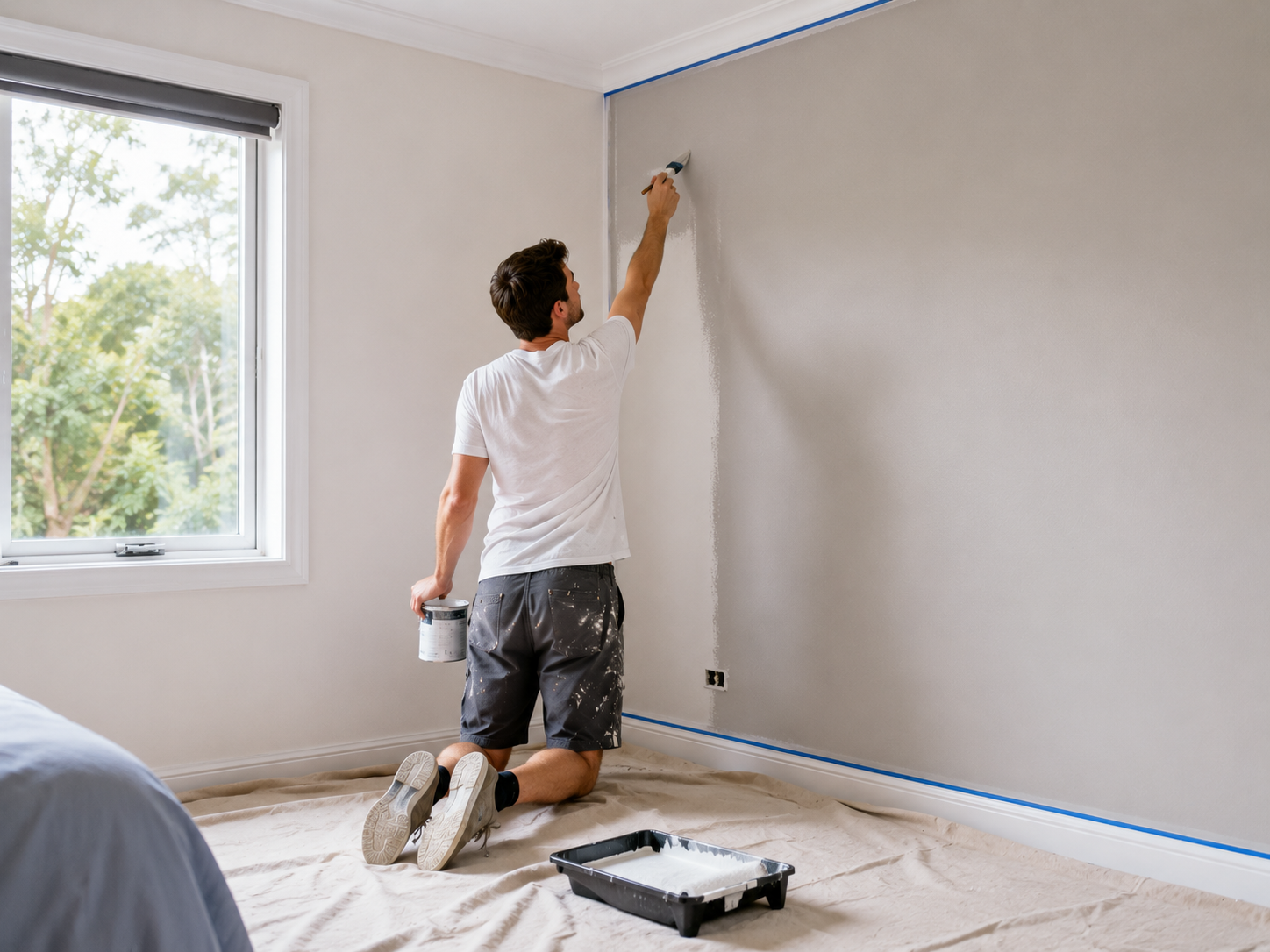
The Real Time Maths
This is where most DIY plans go wrong — not the skill, the hours:
| Project | Professional | Capable DIYer |
|---|---|---|
| One standard room (walls, two coats) | 5 – 7 hours | 8 – 10 hours |
| Room incl. ceiling and trims | 1 – 1.5 days | 2 – 3 days |
| 3-bedroom full interior | 3 – 5 days | 4 – 6 weekends |
A professional's speed comes from preparation systems, no learning curve, and working clean enough to skip rework. Your weekends have a value too — that belongs in the comparison.
The Real Cost Maths
For a standard three-bedroom interior in Geelong, professional painting runs $5,000–$9,500 (full breakdown in our cost guide). DIY materials for the same house — quality paint, brushes, rollers, sleeves, fillers, sanding gear, tape, drop sheets — typically land between $900 and $1,600. The labour saving is real: $4,000–$8,000. The question is what you're trading for it: five-plus weekends, the finish-quality gap, and the risk of redoing rooms that go wrong.
When DIY Genuinely Makes Sense
- A single room or feature refresh — contained scope, contained risk
- Walls in good condition — no cracks, stains, or peeling to repair
- Similar colour over similar colour — no coverage battles, no tinted undercoats
- You have real time — every room is a full day; rushing is what creates the classic interior painting mistakes — lap marks and wobbly lines
- You enjoy it — honestly, this counts; some people find a weekend of rolling walls deeply satisfying
If that's you, our wall painting guide covers the tools, products, and the two techniques — cutting in and keeping a wet edge — that produce a finish you'll be proud of. Then steal the professional shortcuts on top.
When a Professional Is Worth Every Dollar
If you're weighing up whether it's worth paying for a painter, these are the situations where the answer is clearly yes:
- The whole house or multiple rooms — the time maths above collapse at scale
- Repairs involved — cracked plaster, water stains, peeling paint, and mould need diagnosis before paint, not just paint over the top
- Ceilings, stairwells, and high walls — overhead and ladder work is slower, harder, and genuinely a safety issue in stair voids
- Pre-sale repaints — the finish quality from house interior painting services directly affects the price your property photographs at and sells for
- Enamel trim work — brush-mark-free doors and trims are the most technique-sensitive painting in the house
What Professionals Do That DIYers Skip
The gap between an average DIY job and professional work is rarely the rolling — it's everything around it: full sugar-soap washes instead of spot cleans, sanding between enamel coats, tinted undercoats under colour changes, stain-sealing primers over water marks, caulked gaps along every trim line, and final inspection under raking natural light. Each step is small; together they're why one paint job lasts ten years and another looks tired in two. If you do hire — whether through our interior painting service or anyone else — make sure you're hiring that — our guide to choosing a painter shows how to verify it from the quote alone.