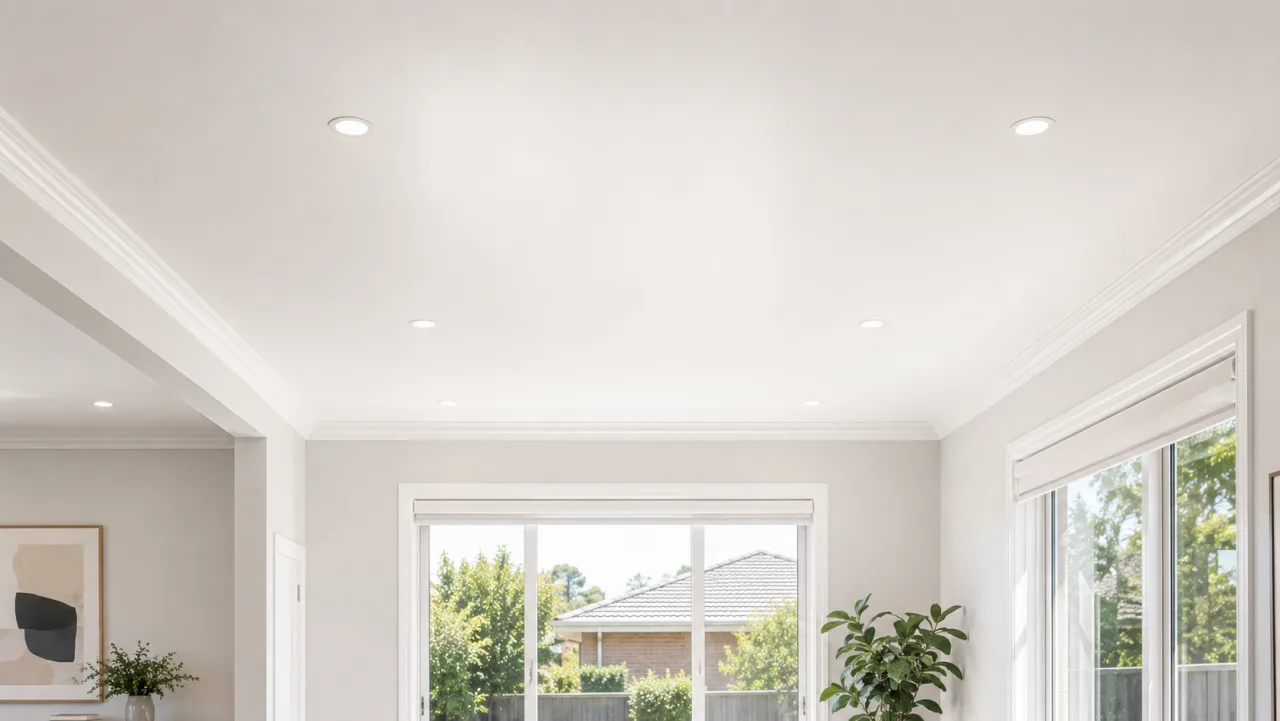
Here's a test: stand in your living room and look up. If the ceiling has a faint yellow-grey tinge, shadowy corners, or a watermark you've learned to ignore, repainting it will transform the room more than almost anything else you could do — because a fresh white ceiling bounces light back down and instantly makes the walls beside it look cleaner and the room feel taller.
Ceiling painting is the most postponed job in home decorating because it's awkward, drippy, and easy to talk yourself out of. This guide covers the best way to paint a ceiling, which paint to use (bathrooms are a special case), what it costs in Geelong, and when it's a job worth handing over. For the full picture on whole-home projects, start with our complete interior house painting guide.
Why Ceilings Need Their Own Paint
Ceiling paint isn't a marketing gimmick — it's formulated differently from wall paint in three ways that matter:
- Dead-flat finish. Ceilings catch raking light along their entire surface, so any sheen highlights every joint, screw pop, and roller mark. Flat ceiling white scatters light and hides it all.
- Higher viscosity. Ceiling paints are thicker so they splatter and drip less when rolled overhead.
- Bright, stable white. Formulated to stay white rather than yellowing, maximising light reflection.
Using leftover wall paint on a ceiling is the most common ceiling mistake — even low-sheen will spotlight imperfections you never knew were there.
Best Paint for Bathroom Ceilings
Bathrooms, laundries, and ensuites are the exception to the flat-paint rule. Steam and condensation feed mould, so the right bathroom ceiling paint is a mould-resistant kitchen-and-bathroom formulation, usually in low-sheen rather than flat because it sheds moisture better and wipes clean. If your bathroom ceiling already has mould spots, kill them first with a mould treatment wash — painting over live mould just gives it a fresh canvas, and it will be back through the new paint within months. In poorly ventilated bathrooms (common in older Belmont and Grovedale homes built before exhaust fans were standard), pairing the repaint with an exhaust fan installation is the only permanent fix.
The Best Way to Paint a Ceiling, Step by Step
The professional sequence — and the order matters:
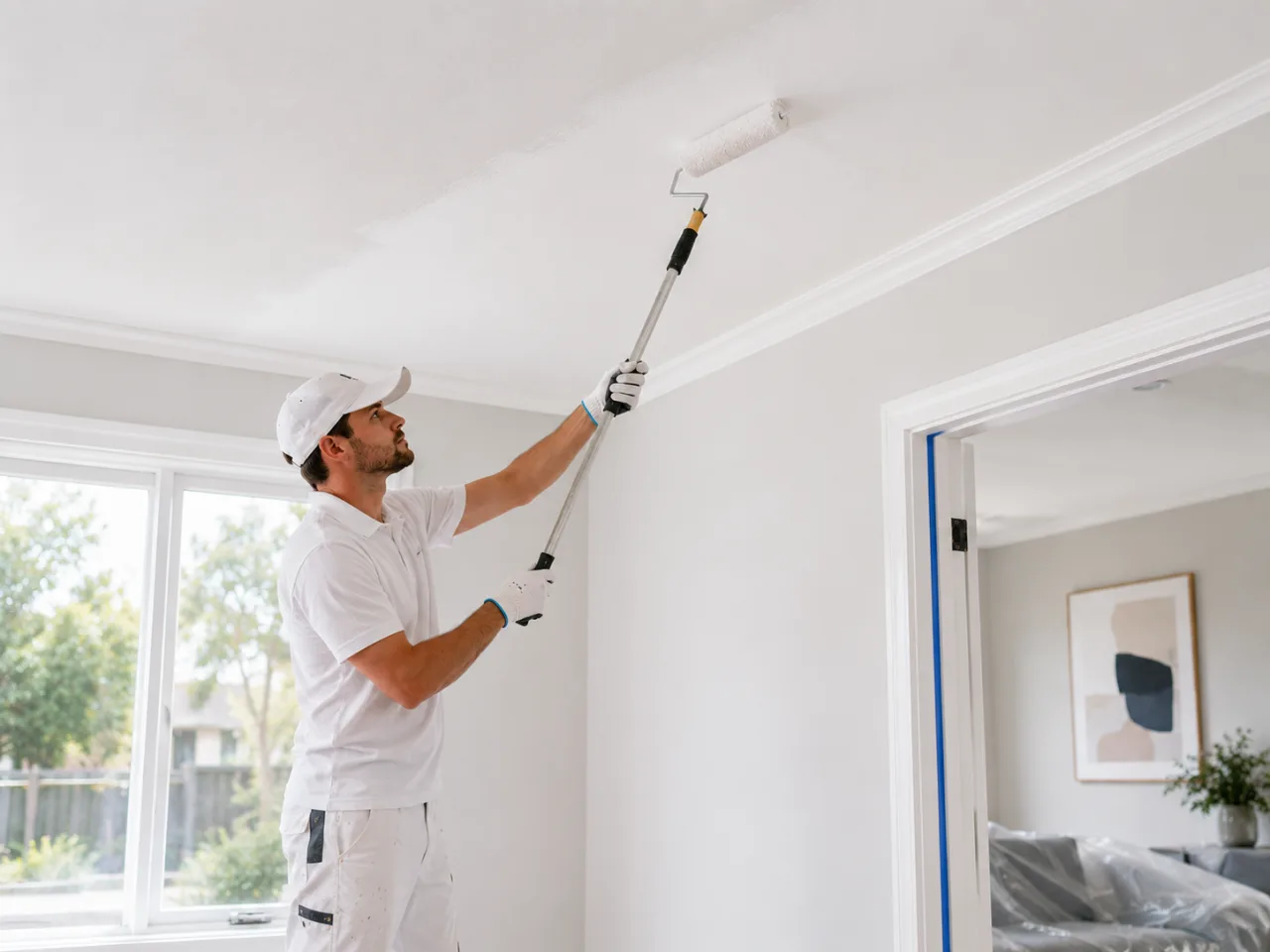
- Clear and cover everything. Ceiling painting drips. Move what you can, drop-sheet the rest, and remove or bag light fittings where practical.
- Fix the surface first. Treat any mould, seal water stains with a stain-blocking primer (or they bleed straight through), and fill cracks and screw pops.
- Cut in the perimeter. Brush a band around the edges and around fittings. Only cut in as far ahead as you can roll while it's wet.
- Roll in one direction, then cross-roll. Use a roller on an extension pole, working in sections about a metre square. Roll your final pass in the same direction across the whole ceiling — toward the main window is the convention — so the texture reads evenly in daylight.
- Keep a wet edge and don't stop mid-ceiling. A ceiling has nowhere to hide a lap mark. Once you start, finish.
- Two coats. Especially over stains, yellowed paint, or colour changes.
Always paint ceilings before walls in any room you're fully repainting — splatter falls downward, and you want it landing on surfaces you haven't painted yet. (Then move on to the walls and finish with the trims.)
Common Ceiling Problems in Geelong Homes
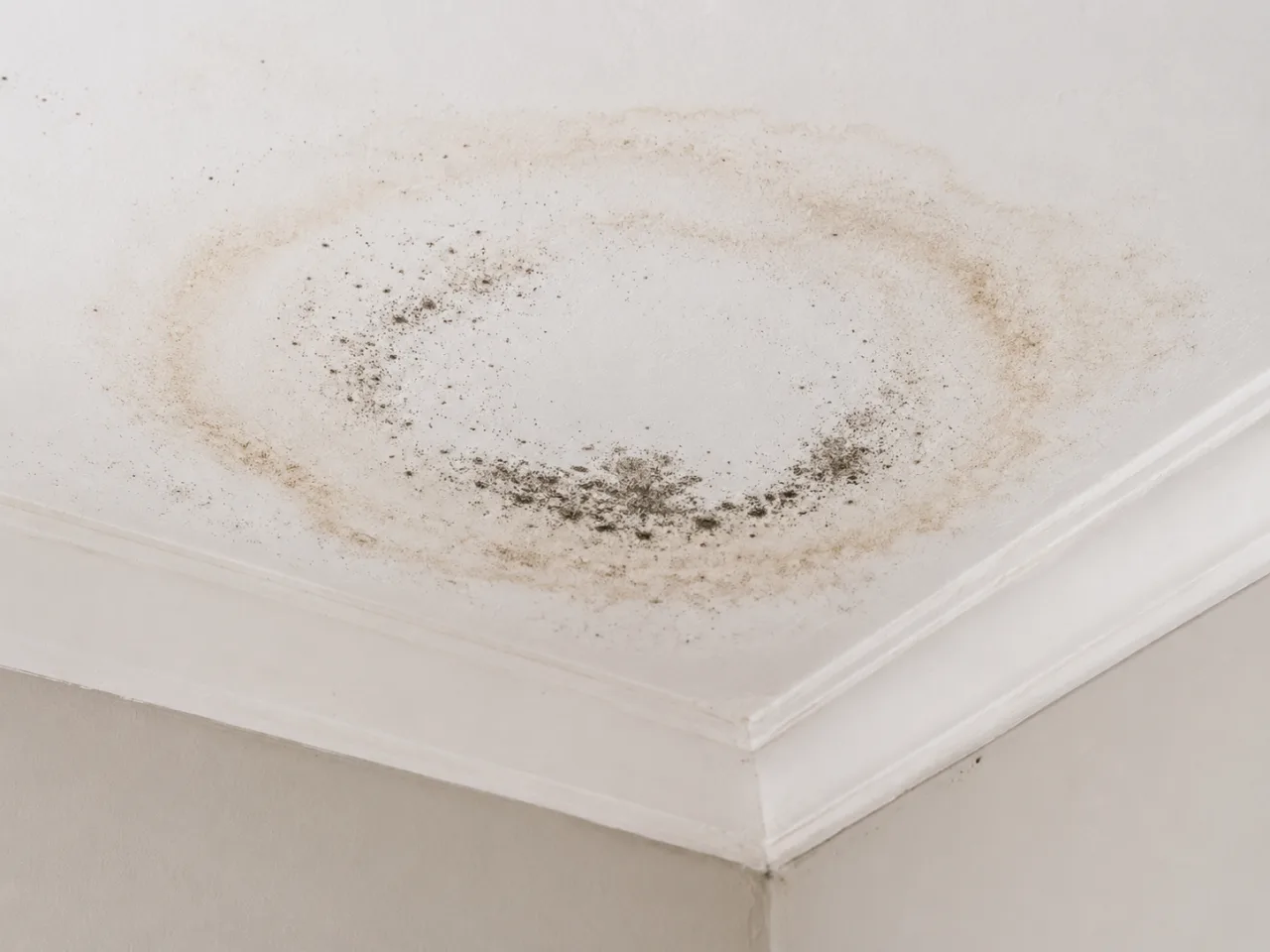
Water stains. Brown rings from past roof leaks or overflowed bathrooms. Fix the source first, then seal with stain-blocking primer before painting — ordinary paint cannot block tannin stains and they reappear within weeks.
Cracking along plasterboard joints. Seasonal movement, common in homes across Lara's newer estates as they settle and in older suburbs alike. Fine cracks need flexible filler; recurring cracks along the same joint may need re-taping.
Sagging or drummy plaster. In older homes, ceiling plaster can separate from its backing. Press gently — movement or a hollow sound means it needs repair before painting, not just paint over the top.
Yellowing. Decades of cooking, heaters, and (in older homes) cigarette smoke. These need washing and often a stain-sealing primer, or the discolouration leaches through.
Popcorn or textured ceilings. Painting over heavy texture takes specialist rollers and far more paint. Many homeowners use the repaint as the moment to have texture removed entirely — budget separately for this.
What Does It Cost to Paint a Ceiling?
In Geelong in 2026, the cost to paint a ceiling professionally is typically $150–$450 per room, or roughly $10–$20 per square metre, with the range driven by ceiling height, surface condition, and repairs. As part of a whole-home repaint, ceilings are usually bundled into a combined rate of $28–$45 per square metre covering walls, ceilings, and trims — the bundled approach is better value than booking ceilings separately. Full project pricing is broken down in our interior painting cost guide.
High ceilings, stairwell voids, and raked ceilings cost more because of access equipment and slower overhead work — this is also where DIY becomes genuinely unsafe, and where hiring ceiling painters stops being a luxury.