Exterior House Painting in Point Lonsdale
Painters of Geelong undertook the exterior house painting of this contemporary residential property in Point Lonsdale. The project involved painting the vertical exterior cladding in dark charcoal, with light-coloured eaves to complement the home’s modern design.
Get a Free Quote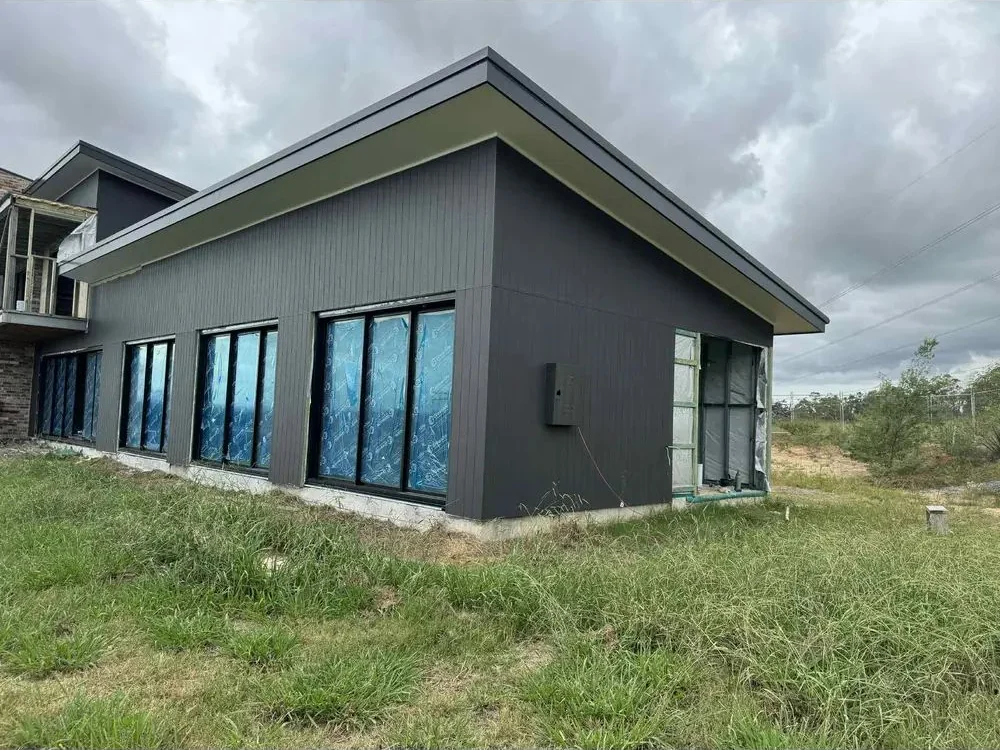
Project at a Glance
Painters of Geelong undertook exterior painting on a contemporary residential property in Point Lonsdale, featuring dark charcoal vertical cladding and contrasting light-coloured eaves. Key painting considerations included achieving even coverage across grooved panels, working around large windows and maintaining neat paint lines along the angled roofline.
- Location
- Point Lonsdale, VIC 3225
- Project type
- Exterior house painting
- Property type
- Residential
- Painting team
- 2 painters
- Surfaces painted
- Cladding and eaves
- Estimated timeframe for similar work
- 3–5 working days
Timeframe applies to comparable single-storey work with straightforward access and limited preparation.
Preparing the Exterior for Painting
Preparing a home like this for painting starts with checking the condition of the cladding, panel joints and areas around the windows. Any dust, dirt or residue from building work needs to be removed to provide a suitable surface for the paint.
The cladding also needs to be assessed to determine whether priming or undercoating is required.
With several large windows positioned close to the painted surfaces, protecting the glass and window frames is another important part of the preparation.
Painting the Exterior Cladding
Our team of Geelong painters painted the home’s vertical exterior cladding in dark charcoal, including the wall sections between the windows and the adjoining exterior walls.
Painting grooved cladding requires more attention than painting a flat wall. The paint needs to cover the recessed grooves, panel edges and broader surfaces evenly.
With a dark exterior colour, differences in paint coverage can become particularly noticeable when sunlight falls across the walls. Maintaining a consistent finish across the different sections is an important part of this type of work.
Painting the Eaves and Working Around Windows
The eaves were finished in a lighter colour to contrast with the charcoal exterior walls.
Working around the angled roofline involves painting at different heights and reaching the junctions between the eaves and cladding. These areas require careful application, particularly where the two colours meet.
The narrow wall sections between the large windows also need attention to maintain even coverage without getting paint onto the adjoining window frames.
Painting Challenges on This Property
The main painting challenges on a property with this design are grooved cladding, higher wall sections, contrasting colours and large windows. Here is how we handled each one.
Maintaining Even Coverage on Grooved Cladding
The vertical grooves make the cladding more involved to paint than a smooth exterior wall. Both the recessed areas and the outer faces of the panels need consistent coverage.
How we handled itWe brushed paint into the grooves and along the edges, a few boards at a time, then rolled the panel faces while that paint was still wet. This helped blend the brushwork. We kept the brush lightly loaded to help stop paint pooling in the grooves.
Reaching the Higher Sections
The sloping roofline creates differences in wall height across the property. Access to the upper sections and underside of the eaves needs to be considered when planning the work.
How we handled itWe checked the wall heights and ground conditions before deciding how to reach each section.
Working with Two Contrasting Colours
The difference between the charcoal walls and light-coloured eaves makes uneven paint edges more noticeable. Keeping the paint lines neat where these surfaces meet is an important finishing detail.
How we handled itWe painted the lighter eaves first and let them dry. We then cut in the darker wall colour along the junction with an angled brush.
Protecting the Windows
The large windows mean adjacent glass and frames need protection while the surrounding walls are painted.
How we handled itWe took care to keep wall paint off the glass and frames, working slowly along the edges and checking for marks as we went.
Painting During Construction
Exterior painting on a property undergoing building work requires consideration of site access, construction dust and other activities taking place around the home. Painted surfaces also need to be protected from subsequent building work.
How we handled itWe coordinated with the builder so painting could be timed away from dusty work, and other trades knew which surfaces were freshly painted.
What to Consider When Painting a Coastal Home
When selecting a coating on the Bellarine Peninsula, exterior painters in Point Lonsdale need to consider sunlight, moisture, wind and salt-laden air.
The paint must also be compatible with the type of cladding being painted. Some cladding manufacturers have restrictions on dark exterior colours because of the additional heat they absorb.
Using suitable exterior coatings and following the manufacturer’s preparation and application requirements helps protect the painted surfaces over time.
How Long Does Exterior Painting Like This Take?
For comparable single-storey exterior painting, a team of two painters would generally allow around three to five working days, depending on the preparation required and access to the property.
Additional wall areas, upper-storey painting, surface repairs and unsuitable weather can extend the timeframe.
What Homeowners Often Ask Us
Is vertical cladding more difficult to paint than a flat wall?
Vertical cladding can take more work than a flat wall because its grooves, joints and panel edges all need even coverage. Preparation and application depend on the cladding’s type and condition.
Does new exterior cladding need an undercoat?
It depends on the cladding material and its existing finish. Some new cladding comes pre-primed, while other products require a specific primer or undercoat before the exterior paint is applied.
Can I use a dark charcoal colour on my home’s exterior?
Yes, if your cladding is suitable for dark paint colours. Some cladding manufacturers restrict dark colours because they absorb more heat, so check these requirements before painting.
Can the walls and eaves be painted without painting the window frames?
Yes. If you’re happy with your existing window frames, they can be left in their current colour and protected while the surrounding walls and eaves are painted.
At what stage of construction should exterior painting be done?
Exterior painting can begin once the surfaces are ready and suitable for coating. Coordinate timing with your builder to limit construction dust, damage to fresh paint and interruptions from other trades.
What affects the cost of painting a home with exterior cladding?
Cost mainly depends on the home’s size and height, cladding type, surface preparation, access and the number of surfaces and colours. High eaves or detailed cladding may add painting time.
Related Painting Projects
Explore more exterior painting work undertaken by Painters of Geelong.
Planning to Paint Your Home’s Exterior?
Building a new home or thinking about repainting your existing property?
Whether you have exterior cladding, weatherboards, rendered walls or eaves that need painting, speak to our team about the work involved, suitable finishes and a quote for your property.
Call 0431 261 281